Presbyterian Public Prayer

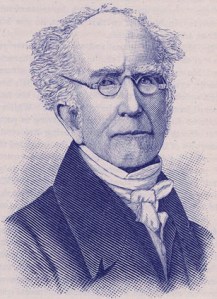
Few have the Old School street cred of Samuel Miller (1769 – 1850). And I recently discovered his Thoughts on Public Prayer, which can be
downloaded from Google Books here.

There are probably some important connections to think about between the relative paucity of congregational prayer in much of American Christianity, and how modern American Christian worship/entertainment is a descendant of New School ideas run wild. So the fact that you need to go to an Old School Presbyterian to think carefully about public prayer should probably be a no brainer, but I’ve been encouraged nonetheless.

Should the congregation face east for prayer (especially when that practice was so common in the ancient church)? What posture or liturgy best suits corporate prayer? Acknowledging that prayer is not mechanistic, but a Spiritually-derived communion of the soul with the Almighty, what steps or means – if any – may be taken to travel towards excellence in our prayer ministry? These questions, and so much more, is for free in Miller’s Thoughts on Public Prayer. Download it now!

Reforming lectio divina

Spirituality is still a huge topic with evangelical Christians, and increasingly practices such as lectio divina are encouraged even for Reformed Christians. But is this practice helpful? And how can it be used by Christians in the Reformed tradition?

Lectio divina (or, divine reading) as described by Kenneth Boa in his book Conformed to His Image, (Zondervan, 2001), 96-97.

The ancient art of lectio divina, or sacred reading, was introduced to the West by the Eastern desert father John Cassian early in the fifth century.

It consists of four elements.

  1. Lectio (reading). Select a very short text and ingest it by reading it several times. Normally, one chooses a verse or a brief passage from the chapters read from the Old and New Testaments in morning Bible reading.
  2. Meditatio (meditation). Take a few minutes to reflect on the words and phrases in the text you have read. Ponder the passage by asking questions and using your imagination.
  3. Oratio (prayer). Having internalized the passage, offer it back to God in the form of personalized prayer.
  4. Contemplatio (contemplation). For the most of us, this will be the most difficult part, since it consists of silence and yieldedness in the presence of God. Contemplation is the fruit of the dialogue of the first three elements; it is the communion that is born out of our reception of divine truth in our hearts.

I think there is much to appreciate about lectio divina, especially its Agassiz-like focus on a text. Further, that Scripture ought to bid us pray and that our prayers ought to be filled with Scripture is an axiom of this discipline, so to the extent that the lectio divina encourages this is a boon. I would even go so far as to say – due to the importance of prayer in the Christian life – that anything that encourages prayer in the life of believers is a good thing. But having said all of this, let me turn to a few concerns. Continue reading

John Adams and Two Kingdom Prayers

McCullough on Adams worship while traveling in Europe
At Rotterdam, on a Sunday, attending services at an English Church, they listened as the English preacher prayed that “a certain king” might have “health and long life and that his enemies might not prevail against him.” Praying silently on his own, Adams asked that George III “be brought to consideration and repentance and to do justice to his enemies and to all the world.” (p. 244)

VanDrunen on prayer
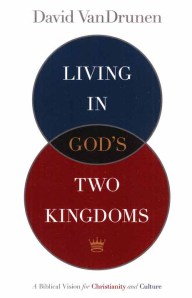
If the minister prays for the peace and prosperity of America, this Christian from a foreign land should have no difficulty saying “amen,” since Scripture straightforwardly instructs believers to pray in this manner (e.g., see Jer. 29:7; 1 Tim. 2:1-2) and surely no Christian should wish war and poverty upon fellow believers anywhere in the world. Likewise, if the minister prays for a just resolution to an international dispute in which America is involved, this Christian should also be abel to repsond with “amen,” for what Christian would not wish justice to be done everywhere in the world?

But now we might imagine that the minister prays for America’s victory in an international dispute or that the congregation is asked to sing a patriotic American song after the sermon (perhaps this Christian just happens to visit America on Fourth of July weekend). What if her own native country is the one having the dispute with America, and her own livelihood and security are at stake? What if she feels patriotic sentiments for her own country and has no interest in expressing patriotism for America? She would be unable to yield her “amen” to such proceedings, and this would be perfectly understandable – just as understandable as an American worshiping in a Russian church and feeling disinclined to pray for the triumph of Russian foreign policy or to sing patriotic Russian songs. When we are immersed in our own culture and own national interests, it is often difficult to realize how often we attach the church’s identity to a national or ethnic identity, and hence betray the spirituality of the church. The scenarios that I have imagined might cause us to pause and to reflect upon how the church can do better at living as thought there really is no Jew, Greek, Barbarian, or Scythian within its walls. (p. 149-50)

A Prayer for the New Year

You have been our shelter Lord, to every generation

From everlasting to everlasting, you are God

You make known the ends from the beginnings

All the days of our lives are written in your book

Because You do not change, O God, we are not consumed

You show steadfast love, to those who trust in You, for a thousand generations

In this new year, O Lord, we seek you and your Kingdom

Therefore, we will not worry, or be anxious, for anything

In this new year, O God, we will receive all things from Your Fatherly hand

Therefore, we will not grumble, or complain, but receive all things, with hope, and gratitude

We will not make plans on our own, but only as You will

For Jesus sake, who is the same yesterday, today and forever, Amen.

Capitol Prayer

CapitolPrayer2Almighty God and Everlasting Father,

We call upon You, the Infinite One, from Whom and through Whom and to Whom are all things. You are the sovereign One, and all sovereignty comes from You. Nations rise and fall and kings receive power and sovereignty from You. In You, true wisdom is found. You know and understand all things, and no one can search out Your ways. From you comes righteousness, justice, and courage. You are the source, and all things are from You. Indeed, we live and move and have our being in You.

And so we call upon You this afternoon seeking divine help. Would you grant, O Lord God, to this august company of men and women, the power that You alone possess to serve those whom they are called to represent. You have placed each of them here, and so grant them the wisdom necessary to make laws and decisions to benefit and bless this great state of Iowa. Instill in them justice and righteousness, that they would always strive to promote that which is true and good and beautiful. Graciously pour out courage and knowledge, that through their decisions and actions You would rule this land for righteousness’ sake.

In all of these things, we ask that You would do this not for anything good within us or for our own sake, but only for the sake of Christ Jesus, by whose blood we may find mercy and grace. Grant all of us a true and abiding faith in Him. We ask these things of you now in His holy and perfect Name, even Christ the Lord.

Amen.

Just In Case You Missed ‘Em

With the overwhelming influx of information available, discerning readers must become selective in what they give their time to read. Just in case you missed ’em, here are some links I found valuable, and hope you will also.

John Owen on Pastoral Prayer
Looking for further resources on how to pray better? Rev. Danny Hyde discusses Owen’s thoughts on public prayer at Meet the Puritans, including how to “improve” upon Christ’s gifts and what it might mean to “study prayer” and “pray while we study.”

Ussher on the Corporate Nature of Baptism
“Thus if we were wise to make a right use of [attending to the sacrament]; we might learn as much at a Baptism as at a Sermon.”

Apostasy Now
The always interesting Lauren Winner writes for Slate to query whether it is even possible to apostasize from mainline Christianity. “Would that America’s Protestant mainline could produce an apostate. For one might say that a group that lacks the necessary preconditions for making apostates can’t make disciples either.” Perhaps you’ve never thought it a good thing, but could you be kicked out of your church? Is there a proportionate relationship between the severity of exclusion and the warmth of inclusion?

Spiritual Alzheimers
“…when you can remember Him no more, God will remember you. ‘Even these may forget, yet I will not forget you. Behold, I have engraved you on the palms of my hands.’”

Contra Accountability Groups
Tullian says “Reminders Are More Effective Than Rebukes” when it comes to living out the Christian life.

Dennis Johnson on Preaching the Gospel
From his magnum opus Him We Proclaim, “…the same gospel that initially called us to faith is the means that perfects us in faith.”

The Bavinck Institute
A wealth of resources. How did I just now hear about this?! Download The Bavinck Review, surf for dissertations on Bavinck that may be downloaded, and find information on a debate regarding Bavinck’s view of Two Kingdoms theology.

The Fun Cult
“Entertainment is a huge American idol. Q/A #1 of the American catechism is this: ‘The chief end of man is to glorify fun and enjoy it forever.'” Bonus: great Trueman quotes on deconstruction of entertainment.