Machen: Dangerous to Follow Christ… in Ministry

J. Gresham Machen“If you decide to stand for Christ, you will not have an easy life…

…in the ministry.”

The sentence starts out making complete sense, and then throws me for a loop. And yet, it also rings very true.

We often hear that standing for Christ in this world will be difficult, but my automatic assumption is that it should for some reason be different in ministry. There, we think, there is where it will always be safe to stand for Christ.

J. Gresham Machen graciously disabuses us of this false assumption, and warns students/pastors in his own day of what they ought to expect if they stand fast for confessional Christianity. R. Scott Clark posts at the Heidelblog a selection from Machen’s 1929 articlesermon “The Good Fight of Faith.” This was Machen’s farewell sermon at Princeton, after the conservatives had lost the fight for the seminary, and just before Machen would organize Westminster that fall. I thought about simply quoting and linking to it, but I appreciated and resonated with it so much I had to say a few things first.

Machen clearly has been reading a lot of new pastor’s diaries when he makes the following astute observations:

  1. People will attack your ministry using the most pious platitudes.
    “Let’s focus on Jesus and not dead doctrine.” “What about the experience of Christ in my heart?” “It doesn’t matter how much you know, it matters what you do/how much you care.” “Christianity isn’t preaching/ministry/truth, it is all about relationships.” All of those statements are heard on a daily basis to denigrate Word and Sacrament ministry, and yet Machen anticipates all of them by more than 80 years.
  2. Tolerance was getting fuzzy even in the ’20s.
    It all depends on what you mean by tolerance as to whether it is a good thing or not. And Machen hits the nail on the head when he calls for honesty and integrity: “the Christian religion is intolerant to the core.”
  3. Only sovereign grace will keep you from a compromised ministry.
    I assumed the challenge of ministry was to keep from sin and to clearly proclaim saving truth. That is true, but the Enemy has a thousand ways to compromise your ministry. Machen puts it eloquently: “All men will speak well of you if, after preaching no matter how unpopular a Gospel on Sunday, you will only vote against that Gospel in the councils of the church the next day…” Sermons and services and letters are fine, but don’t you dare follow through.
  4. Continue reading

How to Pray When The World Gets Evil

Aside

calvin_coinJohn Calvin’s prayer based on Jeremiah 20:7 – 9

Grant, Almighty God, that as at this day a greater and viler impiety breaks forth than at any age, and thy sacred truth is treated with derision by many of Satan’s drudges — O grant, that we may nevertheless constantly persevere in it, nor hesitate to oppose the fury of all the ungodly, and relying on the power of thy Spirit, contend with them until that truth, which thou didst once proclaim by thy Prophets, and at length by thine only-begotten Son, and which was sealed by his blood, may attain its full authority, that as it proves to many the savour of eternal death, so it may also be a pledge to us of eternal salvation, until we shall be gathered into thy kingdom at the coming of the same thy Son Jesus Christ.
Amen.

(HT: Publican Chest | source)

Was Chrysostom Anti-Semitic?

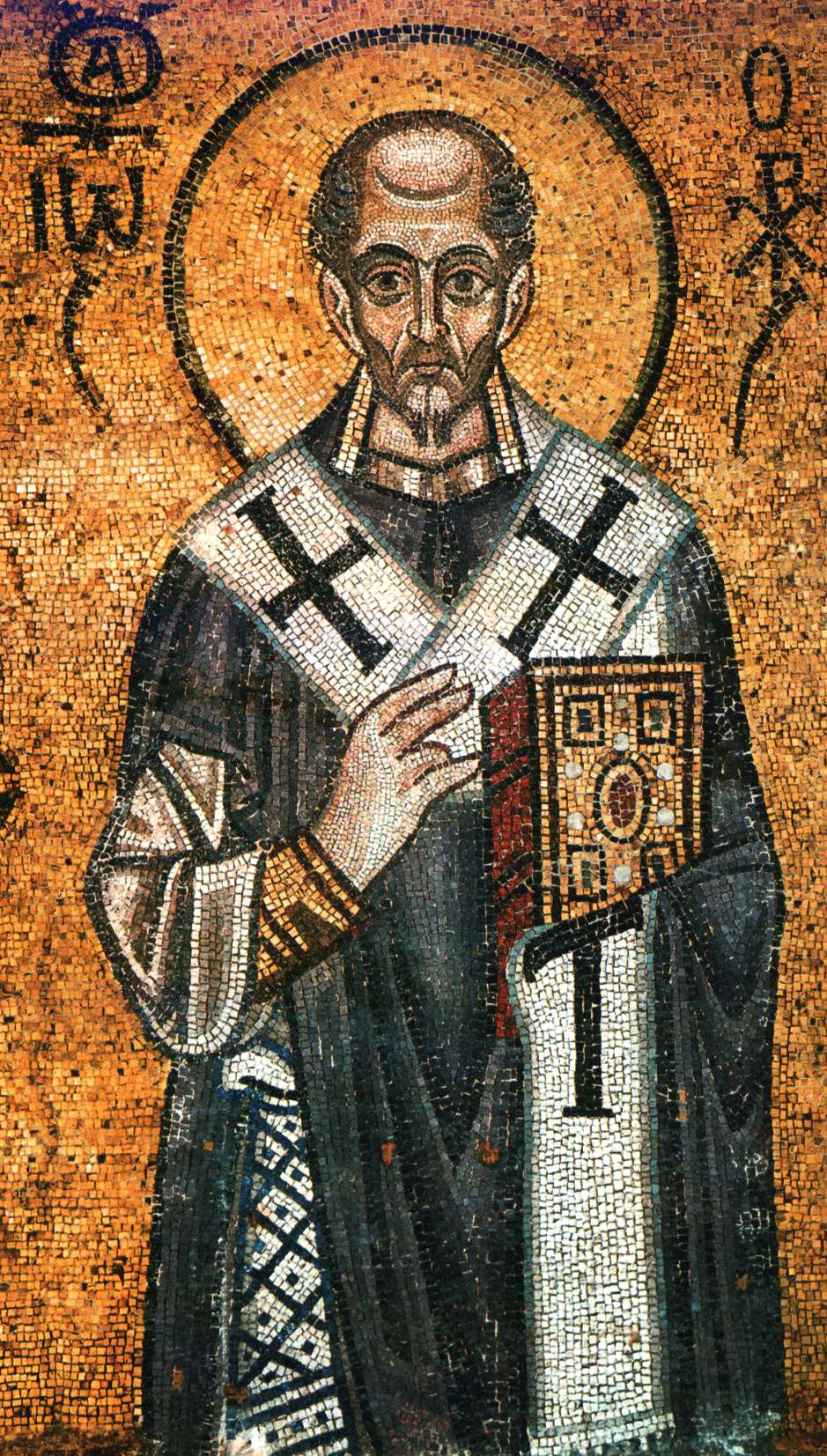
StJohnChrysostomSo says the Rev. James Martin, SJ over at HuffPo: “Saint John Chrysostom, patriarch of Constantinople, writing in the fourth century, used Judas as an example of the wickedness of Jews in general.”

In an article gearing up for the Easter season, the Jesuit author reflects on how Judas has been portrayed through the years, noting that a pillar of the church no less than Chrysostom used Judas as an occasion to unfairly portray Jewish people.

Chrysostom (the name means “golden mouth,” a tribute to his skills as a preacher) was one of several saints whose writings were tinged with — and contributed to — the virulent anti-Semitism common at the time. Judas was evil not only because he had betrayed Jesus, but because he was Jewish.

Chrysostom sees the suicide of Judas as foreshadowing the suffering of the Jews, and comments on this approvingly. In his Homilies on the Acts of the Apostles, he writes: “This desolation [his fate] was a prelude to that of the Jews, as will appear on looking closely into the facts.” That one of the most influential figures in the patristic era could write so cruelly shows not only the rapid assimilation of anti-Semitism into Christianity, but the hardening of the Christian imagination against Judas.

(source)

Martin goes on to deal with other examples – in the Renaissance and later periods – of Judas being used as cannon fodder.

Is this really an accurate way to handle the data, or is there another angle for reading Chrysostom? Continue reading

British Marriage Equality and Marriage Without Sex

Quote

From The Telegraph:

…Lobbyists naturally believed that all you had to do to allow gay marriage was to extend to same-sex couples exactly the same law as applied to existing, heterosexual marriages.

Too late, they discovered, this cannot be done. Civil servants, confronted with the embarrassing task of working out what defined the consummation of a homosexual relationship, faltered. Since homosexual acts have no existential purpose and no procreative result, consummation is a meaningless concept. From this it followed that the Government could come up with no definition of adultery in a homosexual marriage. A law designed to be equal, is not. Under the Bill, non-consummation will not be grounds for divorce in same-sex marriage. Nor will adultery.

By accident, then, the Government is introducing, for the first time, a definition of marriage which has no sexual element. Yet it refuses to face the logical consequence of this surprising innovation. If sexual intercourse is not part of the definition of same-sex marriage, why should blamelessly cohabiting sisters not marry one another in order to avoid inheritance tax? Why should father not marry son? Why shouldn’t heterosexual bachelor chum marry heterosexual bachelor chum? What, come to think about it, is so great about the idea of monogamy, once sex and children are removed from the equation? Does the word “marriage” any longer contain much meaning?

And if Equality is the highest of all moral aims, how can the Government possibly justify not extending the gay right to a civil partnership to heterosexual couples who, at present, have no such privilege? If this Bill becomes law, all these matters will be litigated over, right up to the European Court of Human Rights in Strasbourg. Against such outcomes, as he painfully well knows, Mr Cameron can make no provision.

Possibly the House of Commons, where mere politics reigns and virtually no time has been permitted for debate on the Bill, will fail to think through these issues, although revolt is growing. But precision and fairness in framing our laws are subjects in which the House of Lords rightly claims a key role. The Government faces trouble there. Continue reading

Malick: Only in Russian Characters

Quote

…combine the romantic and innocent side, with the insolent and daring side. For some reason, you only ever see that combination in Russian characters

on filming To the Wonder

To-the-Wonder-4

So, for example, he recommended that Kurylenko read The Idiot with a particular eye on two characters: the young and prideful Aglaya Yepanchin, and the fallen, tragic Nastassya Filippovna. “He wanted me to combine their influences — the romantic and innocent side, with the insolent and daring side. ‘For some reason, you only ever see that combination in Russian characters,’ he said to me.”

_____________________________________________________

As prompts for the actors, Malick shared representative works of art and literature. For Affleck, he suggested Fitzgerald, Tolstoy, and Dostoevsky. (Affleck read Martin Heidegger on his own, having known that Malick had translated one of the German philosopher’s works as a grad student.) For Kurylenko, he also recommended Tolstoy and Dostoevsky — specifically, Anna Karenina, The Brothers Karamazov, and The Idiot. “Those books were, in a way, his script,” she says. But he did more than give the actors the books; he suggested ways to approach the texts and characters to focus on. So, for example, he recommended that Kurylenko read The Idiot with a particular eye on two characters: the young and prideful Aglaya Yepanchin, and the fallen, tragic Nastassya Filippovna. “He wanted me to combine their influences — the romantic and innocent side, with the insolent and daring side. ‘For some reason, you only ever see that combination in Russian characters,’ he said to me.”

source

What Is the Definition of Missional?

jeff-vandersteltJeff Vanderstelt on the definition of “missional” (around the 1:55 mark of this video):

A man stood up at a conference and said, “Missional is the new ‘seeker’… the church finally getting its hands dirty.” Someone asked me to respond to him.

When we say missional, what we mean is:

God’s church is so saturated in the gospel and the mission of Jesus, that they see themselves as the sent ones of Jesus in all of life, to make disciples who make disciples, so that the earth is saturated with people who love Jesus and God is glorified in all things. That’s what I mean when I say missional… I want you to understand there are lots of definitions out there, but I when I say [missional] that’s what I mean.

Could you get behind that definition of “missional?” Why or why not?

Certainly, some terms need to be parsed out. As much as I appreciate Vanderstelt’s ministries, I’m not sure his definition of “God’s church” is the exact same as the Reformed confessions. Nevertheless, there is a lot of good here to chew on.

Vanderstelt also suggests that we ought not quibble over terminology: Why I’m tired of Hearing About “Missional”.

WSCal_2008MRFor more, go back to WSCal’s 2008 annual conference Missional & Reformed: Reaching the Lost & Teaching the Reached. The audio lectures up for free are:

  • Why the Mission Needs the Marks of the Church
  • The Mission and the Confession of the Church: Friend or Foes?
  • Why the Marks of the Church Need the Mission
  • Mission According to Paul
  • Mission in a Pluralistic Age
  • Mission and Missions: Evangelism in the 21st Century
  • Missional and Reformed (Q&A Session)

Michael Horton sums it up: “The mission of the Church is to evidence & execute the marks of the Church.”

Amen.