449 Years of Our “Only Comfort in Life and Death”

A Wordle of the Catechism

On January 19, 1563 the first edition of the Heidelberg Catechism was sent to the printers by Elector Frederick III. The catechism, penned by Zacharius Ursinus and Caspar Olevianus, has served as a masterpiece of theological and pastoral wisdom from God’s Word for Reformed Christians for centuries.

Q. 60 How are you righteous before God?

A. Only by a true faith in Jesus Christ; so that – though my conscience daily accuses me, that I have greatly transgressed all the commandments of God, and kept none of them, and am still inclined to all evil – nevertheless, God, without any merit of mine, but only by His mere grace, grants and imputes to me: the perfect satisfaction, righteousness and holiness of Christ; even so, as if I never had had, nor committed any sin: yea, as if I had fully accomplished all that obedience which Christ has accomplished for me; inasmuch as I embrace such benefits with a believing heart.

What’s so great about the Heidelberg Catechism? Here are ten characteristics for you: Continue reading

Reforming lectio divina

Spirituality is still a huge topic with evangelical Christians, and increasingly practices such as lectio divina are encouraged even for Reformed Christians. But is this practice helpful? And how can it be used by Christians in the Reformed tradition?

Lectio divina (or, divine reading) as described by Kenneth Boa in his book Conformed to His Image, (Zondervan, 2001), 96-97.

The ancient art of lectio divina, or sacred reading, was introduced to the West by the Eastern desert father John Cassian early in the fifth century.

It consists of four elements.

  1. Lectio (reading). Select a very short text and ingest it by reading it several times. Normally, one chooses a verse or a brief passage from the chapters read from the Old and New Testaments in morning Bible reading.
  2. Meditatio (meditation). Take a few minutes to reflect on the words and phrases in the text you have read. Ponder the passage by asking questions and using your imagination.
  3. Oratio (prayer). Having internalized the passage, offer it back to God in the form of personalized prayer.
  4. Contemplatio (contemplation). For the most of us, this will be the most difficult part, since it consists of silence and yieldedness in the presence of God. Contemplation is the fruit of the dialogue of the first three elements; it is the communion that is born out of our reception of divine truth in our hearts.

I think there is much to appreciate about lectio divina, especially its Agassiz-like focus on a text. Further, that Scripture ought to bid us pray and that our prayers ought to be filled with Scripture is an axiom of this discipline, so to the extent that the lectio divina encourages this is a boon. I would even go so far as to say – due to the importance of prayer in the Christian life – that anything that encourages prayer in the life of believers is a good thing. But having said all of this, let me turn to a few concerns. Continue reading

John Adams and Two Kingdom Prayers

McCullough on Adams worship while traveling in Europe
At Rotterdam, on a Sunday, attending services at an English Church, they listened as the English preacher prayed that “a certain king” might have “health and long life and that his enemies might not prevail against him.” Praying silently on his own, Adams asked that George III “be brought to consideration and repentance and to do justice to his enemies and to all the world.” (p. 244)

VanDrunen on prayer
If the minister prays for the peace and prosperity of America, this Christian from a foreign land should have no difficulty saying “amen,” since Scripture straightforwardly instructs believers to pray in this manner (e.g., see Jer. 29:7; 1 Tim. 2:1-2) and surely no Christian should wish war and poverty upon fellow believers anywhere in the world. Likewise, if the minister prays for a just resolution to an international dispute in which America is involved, this Christian should also be abel to repsond with “amen,” for what Christian would not wish justice to be done everywhere in the world?

But now we might imagine that the minister prays for America’s victory in an international dispute or that the congregation is asked to sing a patriotic American song after the sermon (perhaps this Christian just happens to visit America on Fourth of July weekend). What if her own native country is the one having the dispute with America, and her own livelihood and security are at stake? What if she feels patriotic sentiments for her own country and has no interest in expressing patriotism for America? She would be unable to yield her “amen” to such proceedings, and this would be perfectly understandable – just as understandable as an American worshiping in a Russian church and feeling disinclined to pray for the triumph of Russian foreign policy or to sing patriotic Russian songs. When we are immersed in our own culture and own national interests, it is often difficult to realize how often we attach the church’s identity to a national or ethnic identity, and hence betray the spirituality of the church. The scenarios that I have imagined might cause us to pause and to reflect upon how the church can do better at living as thought there really is no Jew, Greek, Barbarian, or Scythian within its walls. (p. 149-50)

Reflections on the Iowa Caucus

As they were related to me from Concord & Garfield Townships of Hancock County:
Gingrich: 25%
Santorum: 22%
Paul & Romney: 18% (tie)
Perry & Bachman: 8-10% (tie)

For the entire state:
Romney: 25%
Santorum: 25%
Paul: 21%
Gingrich: 13%

If Gingrich is taken out of the front runner position, the results look much closer to the state’s overall results. I wonder how much of Gingrich’s positioning is the result of a dinner & speech event he held at Mason City, IA (20 min. away) several weeks ago. Clearly, the two townships represented at this caucus were just slightly out of step with the rest of the state. It will interesting to see how Iowa, and Hancock county more specifically, matches up to New Hampshire and national primary votes for the GOP candidate. Continue reading

Dabney’s 7 Points for Preaching

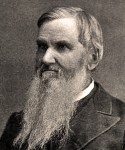
R. L. Dabney

T. David Gordon’s Why Johnny Can’t Preach is responsible for bringing R.L. Dabney’s (1820 – 98) 7 “cardinal requisites” back on my radar. I’m generally against “New Year’s Resolutions” as being far too American and theologia gloriae (wink, wink), but I do hope to reflect more proactively to my own preaching in light of Dabney’s requisites for the year to come.

When I first read these, I was surprised to see nothing about “Christ-centered,” “redemptive historical,” etc. Now, I would suggest that Dabney is getting more at preaching method than content. Thoughts? Without further ado, then, the 7 “cardinal requisites:”

1. Textual Fidelity
“Since the mind of God is disclosed in Scripture, the sermon must be entirely faithful to the text-a genuine exposition of the particular thought of a particular text.”

2. Unity
“Unity requires two things. The speaker must, first, have one main subject of discourse, to which he adheres with supreme reference throughout. But this is not enough. He must, second, propose to himself one definite impression on the hearer’s soul, to the making of which everything in the sermon is bent.” Continue reading

A Prayer for the New Year

You have been our shelter Lord, to every generation

From everlasting to everlasting, you are God

You make known the ends from the beginnings

All the days of our lives are written in your book

Because You do not change, O God, we are not consumed

You show steadfast love, to those who trust in You, for a thousand generations

In this new year, O Lord, we seek you and your Kingdom

Therefore, we will not worry, or be anxious, for anything

In this new year, O God, we will receive all things from Your Fatherly hand

Therefore, we will not grumble, or complain, but receive all things, with hope, and gratitude

We will not make plans on our own, but only as You will

For Jesus sake, who is the same yesterday, today and forever, Amen.

Edwards’ Resolutions

Of all things penned by the inestimable Jonathan Edwards (1703 – 1758), his “Resolutions” is one of the more widely known works alongside “Sinners in the Hands of An Angry God.” As we come into a new year (2012), it is helpful to revisit his ideas, his zeal, and his resolutions for considering how we will conduct our own lives in the time God grants to us.
Penned in a span of two years, when Edwards was himself barely out of the teenage years and just embarking on adulthood, these words stir our souls and challenge us to behold God’s grace work powerfully in our own lives.

Briefly, Desiring God lists the Resolutions according to topic and with subheadings. Steve Camp gives us a good perspective on how Edwards viewed these Resolutions as a mature man and seasoned Christian later in life.  Without any further ado, the Resolutions.

____________________________

Edwards’ Resolutions (1722 – 23)
Being sensible that I am unable to do anything without God’s help, I do humbly entreat him by his grace to enable me to keep these Resolutions, so far as they are agreeable to his will, for Christ’s sake.

Remember to read over these Resolutions once a week.

1. Resolved, that I will do whatsoever I think to be most to God’s glory, and my own good, profit and pleasure, in the whole of my duration, without any consideration of the time, whether now, or never so many myriad’s of ages hence. Resolved to do whatever I think to be my duty and most for the good and advantage of mankind in general. Resolved to do this, whatever difficulties I meet with, how many and how great soever.

2. Resolved, to be continually endeavoring to find out some new invention and contrivance to promote the aforementioned things.

3. Resolved, if ever I shall fall and grow dull, so as to neglect to keep any part of these Resolutions, to repent of all I can remember, when I come to myself again.

4. Resolved, never to do any manner of thing, whether in soul or body, less or more, but what tends to the glory of God; nor be, nor suffer it, if I can avoid it. Continue reading

Merry Christmas from the Lunds

Merry Christmas! May you know God’s peace on earth and His goodwill through His Son, Jesus Christ, this Christmas time.

Since we cannot be there to give you a gift in person, hopefully you’ll receive these dance routines we worked up. Click the picture to watch the short video. (offsite)


One of my favorite songs for Christmas time: Tchesnokoff “Salvation is Created”

It wouldn’t be complete without Calvin & Hobbes snowmen

Nativity
by John Donne Continue reading

How to Preach Christ from the OT

I’m working through sections of Sidney Greidanus’ Preaching Christ from Genesis: Foundations for Expository Sermons for a sermon series coming up on Abraham’s life in Genesis 12 – 25. I’ve looked at preaching Christ from the OT before, but never explicitly from Greidanus. He presents seven means by which we can see Christ in OT passages, and I’d like to list those below. Greidanus defines preaching Christ as “preaching sermons which authentically integrate the message of the text with the climax of God’s revelation in the person, work, and/or teachings of Jesus Christ as revealed in the New Testament” (Preaching Christ from the Old Testament, 10).

Greidanus presents seven avenues to get to Christ from a text, and this is necessary if the interpreter is seeking to understand the text first, as the writer intended for Israel (or the original audience) to hear the message; and secondly, as the message is understood in light of the completed canon of the Triune God’s self-revelation to His covenant people. When both are recognized as necessary, the interpreter realizes seeing Christ in light of a passage isn’t an add on, but necessary to understanding the fullest and truest meaning of a pericope.

7 Ways of Preaching Christ

The following comes from pp. 2-6.

Redemptive Historical Progression
Scripture is a narrative that begins with a good creation, is abruptly marred by the Fall, and then traces God’s redemptive purposes in human history to bring about redemption and the New Creation. First through Abraham, and then Israel, the story of redemption climaxes and is focused in the advent of Jesus Christ. This method seeks to understand a pericope in light of this “metanarrative.” Continue reading

Zion Christmas Cantata & Narration

ZION CANTATA
December 18, 2011
________________________________________________

Prelude

Narrator
Have you noticed how fast the days are going? When the holidays approach, the days fly by. More presents to buy, cookies to bake, decorations to be hung… in all the hustle and bustle, there is not enough time in the day – the day of Christmas is coming!

All this work for one day. The ancient prophets spoke of a Day, a Day that would bring rest instead of weariness, a Day of peace amidst war and strife, and a Day of beauty and glory far away from our gray and dreary days on earth. But when will this day come? And what does Christmas have to do with this Day?

On This Day, Earth Shall Ring

Narrator
What wonderful sounds: “gloria in excelsis Deo!” Glory to God in the highest! Surely there are few things sweeter to hear.

Can you imagine keeping watch with the shepherds as they watched their flocks by night? Can you contain your awe and excitement, as the air around them begins to tremble with a heavenly power. But wait a minute! Do you hear that? What is that sound? It sounds like the most beautiful voices ever assembled, a swirling of the melodies and harmonies of glory. Behold! A light in darkened night sky!  Let joy fill our hearts!

All My Heart This Night Rejoices Continue reading