Classic, Snarky, Ships Passing in the Night

Aside

David Lose: [One viewpoint is that] the passages may or may not refer to homosexuality as we know it, but they – and all of Scripture – are conditioned by the cultural and historical realities of the authors and so offer an incomplete and insufficient understanding of creation and nature and so cannot be used to prohibit homosexual practice today. Rather, one needs to read the larger biblical witness to discern God’s hopes for caring, mutually-supportive relationships, whether heterosexual or homosexual.

PastorDaddy82: Classic speaking to the word without letting the Word speak to you…

LoveAndPeace: That comment is judgmental and indicates lack of value and respect for individual interpretation by all God centered people. Maybe the Word is not speaking to the author of the comment….? That statement cuts both ways.

Me: Dear LoveAndPeace,

Please stop being so judgmental and intolerant of PastorDaddy82′s comment.

You would have more value and respect for his comment if you understood that Bible verses may or may not refer to Internet comments as we know them today, but they – and all of Scripture – are conditioned by the cultural and historical realities of the authors and so offer an incomplete and insufficient understanding of creation and nature and so cannot be used to prohibit anybody from saying anything on a blog/message board today.

Thank you in advance for not judging my comment to you, but recognizing that is in fact correct, as nature itself reveals.

source

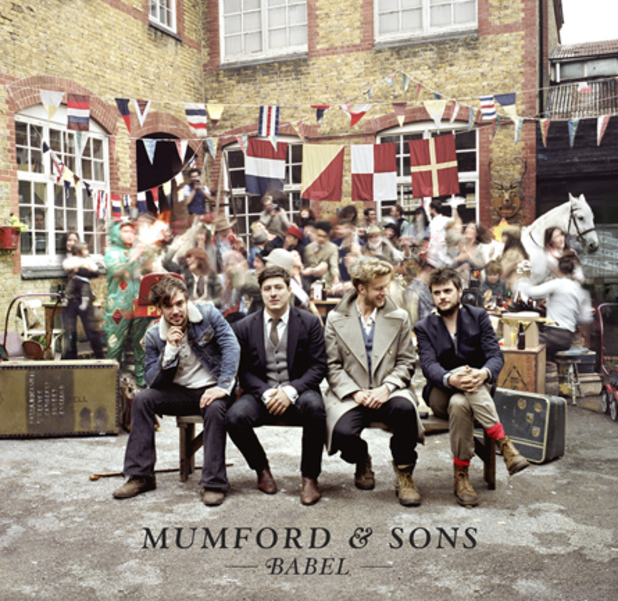
Mumford & Sons on SNL, New Album

The fab four were the musical hosts on SNL this past weekend, and played “I Will Wait” and “Below My Feet” from the forthcoming Babel
http://www.hulu.com/watch/404174
http://www.hulu.com/watch/404170
You can purchase the new album which goes on sale tomorrow. If you buy through the following link on Amazon, you support BrianJLund.com. Thanks!

Amazon: Purchase Babel

Revitalizing A Church

About

Resources

Events

Spread!

Mark Dever interviews Andy Davis for 9Marks on Davis’ remarkable experience witnessing God’s favorable blessing on his church. This is “must listen” material for all Christians who long to see their congregations reformed and always reforming.

Read more and download the interview at the 9Marks website.

Jesus Is – And Calls Us to Be – Light

Dear Zion,

Sometimes we look at all of the problems in the world, and it can become overwhelming. We see the darkness even in our own lives: broken & fractured relationships between husband & wife, parent & child, and family members; untrusting communities; dishonesty, greed and pride. So what is God doing about it now, and what are we to do?

The Gospel of John tells us that Jesus came as the “true light of the world” (1:9). The only way to combat the darkness of sin, injustice, violence, oppression and pride of this world was if God’s Light came fully human into our lives to chase away the shadows. And in Jesus, the Light of the World, we see the glory of God (John 1:14; II Corinthians 4:4 – 6).

By coming as the Light, Jesus went to war against darkness. Darkness is the absence of light, and darkness cannot remain where the true Light shines. Even in the Old Testament, God had promised He would send “a light for the nations, that my salvation may reach to the end of the earth” (Isaiah 49:6; cf. 42:6). So God began the Light when He spoke it into existence in Genesis 1. And in our rebellion; our divine treason; our sin against God – humanity had rejected the Light and lived in darkness. But God promised to send His light again, and Jesus is our “bright Morning star” (II Peter 1:19) and the “Sun of Righteousness” (Malachi 4:2). Continue reading

Reforming the Local Church

About

Resources

Events

Spread!

Reforming the Local Church

Reforming your local church is no easy task. Let me begin by stating that the substance of what follows is advice based on personal experience in three pastorates, as well as my interaction with pastors from across the country who have come to embrace Reformation theology and attempted to incorporate that theology into the life of their respective churches.

First Things First
Two preliminary observations are in order. First, it must be understood that there is no guarantee that what has worked in one place will achieve the same results elsewhere. What follows is an overview of what I and others have done and should not be viewed as a sure-fire formula. If anything, I pray that this summary will be used as a guideline for pastors as they think through the comprehensive challenges of reforming a local church.

Second, reforming a church ordinarily begins with the pastor. This is only right because it is through the preaching and teaching of this biblically ordained office that the doctrinal direction is established. If the pastor and elders are not convinced that Reformational theology is the proper theological framework, not much progress will be made. Any effort on the part of the laity (no matter how noble the intention) to teach contrary to the doctrine of the pastor and elders is disruptive to church order. Once laypeople have become convinced of Reformational theology, however, they can be instrumental in bringing these truths to bear in the life of their local church if: (1) they have access to the pastor and elders; (2) they have the confidence and support of the pastor and elders; and (3) they proceed with permission and caution. I will begin with advice for pastors and conclude with a reflection for lay reformers.

The Ground on Which You Stand
Pastors, know your context. There is a huge difference between reforming an existing church that stands within the Reformed tradition but has drifted from its standards, and bringing Reformational theology into a new context where it has never been intentionally or formally held. Continue reading this article by Ken Jones at ModernReformation…→

Ten Propositions from Christ the Lord

After the Lordship-Salvation controversy between John MacArthur and Zane Hodges in the 1980’s, the White Horse Inn crew released Christ the Lord: The Reformation and Lordship Salvation (Baker, 1992). At the end of their collection of essays, ten propositions are put forward. Here they are for you to chew on. Thoughts?

  1. It is impossible that saving faith can exist without a new nature and thereby new affections (love, a desire for holiness, and so on).
  2. Saving faith is nevertheless not the same thing as such affections or desires and does not include in its definition the effects of which the new birth is the cause.
  3. It is not enough to say that we are justified and accepted by grace alone, for even Rome has agreed that is is only by God’s grace that we can become transformed in holiness. We must add that we are justified by grace alone through faith alone, and it is a great error to change the meaning of faith to include acts of obedience and repentance in an effort to make a disposition other than knowledge, assent, and trust a condition of justification.
  4. The definition of saving faith is: Knowledge, which we take to mean the intellectual grasp of the relevant historical and doctrinal facts concerning Christ’s person and work and our misery; Assent, or the volitional agreement of our hearts and minds that these facts are true; and Trust, which is the assurance that these facts that are true are not only true generally, but true in my own case. In this way I abandon all hope for acceptance with God besides the holiness and righteousness of Christ.
  5. Continue reading

The Cambridge Declaration

Ever heard of The Cambridge Declaration?

Introduction
In April 1996, the Alliance of Confessing Evangelicals held its first major meeting of evangelical scholars. The Cambridge Declaration, first presented at this meeting, is a call to the evangelical church to turn away from the worldly methods it has come to embrace, and to recover the Biblical doctrines of the Reformation. The Cambridge Declaration explains the importance of regaining adherence to the five “solas” of the Reformation.

April 20, 1996
Evangelical churches today are increasingly dominated by the spirit of this age rather than by the Spirit of Christ. As evangelicals, we call ourselves to repent of this sin and to recover the historic Christian faith.

In the course of history words change. In our day this has happened to the word “evangelical.” In the past it served as a bond of unity between Christians from a wide diversity of church traditions. Historic evangelicalism was confessional.

Sola Scriptura: The Erosion of Authority

Scripture alone is the inerrant rule of the church’s life, but the evangelical church today has separated Scripture from its authoritative function. In practice, the church is guided, far too often, by the culture. Continue reading →