
Unknown's avatar

About blund

Brian J. Lund is minister of Word & Sacrament at Zion Evangelical & Reformed Church. You can follow him at his website or @BrianJLund.

John Murray on Creation as Analogical Days

From his Principles of Conduct, Murray discusses the importance of Sabbath principles. In his discussion, Murray’s language struck my ears (eyes?) as sounding similar to the language often employed when defending the analogical day view of Creation. He says:
The seventh day referred to here [Gen 2:2-BJL] is unquestionably the seventh day in sequence with the six days of creative activity, the seventh day in the sphere of God’s action, not the seventh day in our weekly cycle. In the realm of God’s activity in creating the heavens and the earth there were six days of creative action and one day of rest. There is the strongest presumption in favour of the interpretation that this seventh day is not one that terminated at a certain point in history, but that the whole period of time subsequent to the end of the sixth day is the sabbath of rest alluded to in Genesis 2:2 …. God’s week, if we may use that term, is not a cycle, it is a once-for-all accomplishment… Does this [Gen 2:3-BJL] refer simply to God’s sabbath, or does it refer to a weekly day of rest in the cycle and sequences of our time?… Even in Exodus 20:11 it is difficult to ascertain whether the sabbath referred to is expressly the seventh day in the realm of God’s activity or the seventh day in man’s weekly cycle. But the significant feature of this verse is that, whichever interpretation we adopt, the sabbath of God’s rest is the reason given for the sabbath of man’s rest, the recurring seventh day of the week. And this would carry with it the inevitable inference that God blessed and sanctified the seventh day of our week precisely because he sanctified the seventh day in the realm of his own creative activity… In the transcendent realm of God’s opera ad extra, on the grand plane of his creative action, he rested on the seventh day. God’s mode of operation is the exemplar on the basis of which the sequence for man is patterned… there is strong presumption in favour of the view that it refers specifically and directly to the sabbath instituted for man.
(emphasis original) pp. 30-32 

Now, I don’t claim to know which position Murray maintained when it comes to the Creation debate. (A quick glance at his Collected Works and Principles didn’t turn up any answers. Does anybody know? Which groups generally claim him? I was assuming he would be fairly “vanilla” on this subject.) And I’m not saying that his language here necessitates that Murray held to an Analogical Day view. But differentiating between “the sphere of God’s action” and “our weekly cycle,” and “God’s week” being a once-for-all accomplishment as opposed to the cyclical nature of “our time” does seem to put Murray as holding that the Creation Week was archetypal and our weeks are antitypical. He acknowledges the difficulty of discerning between “the realm of God’s activity” and “man’s weekly cycle” in the 4th Commandment, which would imply that the Creation Week is on another register from creaturely experience.

Again, I’m sure this language doesn’t pigeonhole Murray. In fact, he may be purposefully distancing himself from an Analogical view when he concludes that the blessed sabbath of Gen 2:3 is in fact the sabbath that humans participate in.

Is Murray a supporter of the Analogical Days view? What other position might his language support? If you find another reference, be sure to leave work and page number in the comments below!

Deconstructing Middle Earth?

I’ve always been a Tolkien fan, having been exposed to The Hobbit when I was young and then reading The Lord of the Rings as a jr. higher. No, thank you for asking, I wasn’t a nerd.

But I did fall head over heals for Arda and Tolkien’s mythos so much so that I didn’t go on a date until I was 25 memorized Elvish language and devoured The Silmarillion and Unfinished Tales. So imagine my cautioned interest when I heard that Russian paleontologist Kirill Yeskov penned “The Last Ringbearer,” a re-imagining of Tolkien’s trilogy. Translated by Yisroel Markov, Yeskov’s vision of Middle Earth does away with what he perceives to be a romanticized and naive morality in Tolkien’s yarn, and instead speculates from a Mordor-centric understanding. Here, Gandalf is a war-monger who is trying to hold back the civilizing and modernizing effects of Mordor’s innovation.

All this makes me as equally intrigued as suspicious. What do you think? Is such fiction harmless and good for the franchise? Or can such a retelling with such a strong anti-Tolkien lens bear any fruit?

Salon.com – “Middle Earth According to Mordor” Lauren Miller analyzes whether Yeskov’s work is “fan fic” or a parody that hits closer to home.
“The Last Ringbearer” – translated and download

Ridderbos Uses Circumcision to Understand the Law for Christians

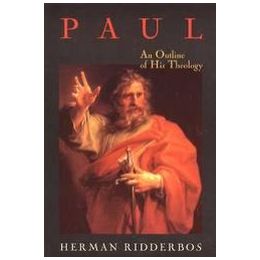
Ridderbos_PaulOutlineTheologyRidderbos reflects on “how much Christ, the law, the Spirit, and love constitute a unity may appear from a comparison of the following parallel pronouncements.” I found his insights illuminating, and tried to reconstruct some of what he shows below.
Galatians 5:6 For in Christ Jesus neither circumcision nor uncircumcision counts for anything, but only faith working through love.
Galatians 6:15-16 For neither circumcision counts for anything, nor uncircumcision but a new creation.  And as for all who walk by this rule [= canon], peace and mercy be upon them,
1 Corinthians 7:19 For neither circumcision counts for anything nor uncircumcision, but keeping the commandments of God.


Philippians 3:3 For we are the real circumcision Who worship by the Spirit of God and glory in Christ Jesus and put no confidence in the flesh

The true “[S]pirituality” that the New Covenant in Christ produces is the work of love as it keeps the commandments of God born out of regeneration in the Spirit.

Paul: An Outline of His Theology p. 285ff.

Just In Case You Missed ‘Em

With the overwhelming influx of information available, discerning readers must become selective in what they give their time to read. Just in case you missed ’em, here are some links I found valuable, and hope you will also.

John Owen on Pastoral Prayer
Looking for further resources on how to pray better? Rev. Danny Hyde discusses Owen’s thoughts on public prayer at Meet the Puritans, including how to “improve” upon Christ’s gifts and what it might mean to “study prayer” and “pray while we study.”

Ussher on the Corporate Nature of Baptism
“Thus if we were wise to make a right use of [attending to the sacrament]; we might learn as much at a Baptism as at a Sermon.”

Apostasy Now
The always interesting Lauren Winner writes for Slate to query whether it is even possible to apostasize from mainline Christianity. “Would that America’s Protestant mainline could produce an apostate. For one might say that a group that lacks the necessary preconditions for making apostates can’t make disciples either.” Perhaps you’ve never thought it a good thing, but could you be kicked out of your church? Is there a proportionate relationship between the severity of exclusion and the warmth of inclusion?

Spiritual Alzheimers
“…when you can remember Him no more, God will remember you. ‘Even these may forget, yet I will not forget you. Behold, I have engraved you on the palms of my hands.’”

Contra Accountability Groups
Tullian says “Reminders Are More Effective Than Rebukes” when it comes to living out the Christian life.

Dennis Johnson on Preaching the Gospel
From his magnum opus Him We Proclaim, “…the same gospel that initially called us to faith is the means that perfects us in faith.”

The Bavinck Institute
A wealth of resources. How did I just now hear about this?! Download The Bavinck Review, surf for dissertations on Bavinck that may be downloaded, and find information on a debate regarding Bavinck’s view of Two Kingdoms theology.

The Fun Cult
“Entertainment is a huge American idol. Q/A #1 of the American catechism is this: ‘The chief end of man is to glorify fun and enjoy it forever.'” Bonus: great Trueman quotes on deconstruction of entertainment.

Valentine’s Banquet: Marriage for the Glory of God

If you would like to download the booklet give away that was referenced at the banquet, please click here: Renewing Marital Intimacy by David Powlison. Select “download” in the upper right corner. This book comes as a .pdf file, so to open it you will need a free .pdf reading program like Adobe Acrobat Reader or Foxit Reader (recommended). If you would rather not download and would like a printed booklet, leave a comment below stating your name and your desire for Zion E&R Church to print it for you, or send me an email. 

Zion Valentine’s Day Banquet
“Marriage for the Glory of God”

Thanks so much for joining us at this Valentine’s Banquet. If I understand this correctly, this is our first annual Valentine’s Banquet for couples. Clearly, we need to improve the entertainment for next year!
Continue reading

The Glory of God for Worship

Dear Zion,

One of the things I enjoy doing most with you is spending time in worship to give glory to God. Thinking about what we do in worship helps us to realize how important it is to bring glory to God in all that we do.

The activity of bringing glory to God is something that we learn chiefly from God Himself. Everything our Triune Lord does brings praise, honor, and glory to Himself. Scripture is replete with the fact that everything God does is glorious, and it is all “from Him, and through Him, and for Him forever” (Romans 11:36). Even our existence falls into this category, as we are those “whom I created for My glory” (Isaiah 43:6-7). “God chose us in Christ before the foundation of the world” and the purpose of this was “to the praise of the glory of His grace” (Ephesians 1:4-6). More specifically, He called Israel “in whom I will be glorified” (Isaiah 49:3). When He brought Israel through the Red Sea in the Exodus, it was for His glory (Psalm 106:7-8), and it was this same reason He never forsook them in their later rebellions (I Samuel 12:22). For the glory of His Name’s sake, God forgives our sins (Psalm 25:11; Isaiah 43:25), He welcomes us (Romans 15:7), He gives us the Holy Spirit (John 16:14), and brings us to our heavenly home (John 17:24) – all for His glory! When God tells us in Isaiah 48:9-11 “I will not share My glory with another,” John Piper reminds us in his book Let the Nations Be Glad that God’s ultimate goal is His glory, and that “the most passionate heart for the glorification of God is God’s [own] heart.”[1]

So when we live our lives for God’s glory, we are joining with the Almighty Jehovah in the most important activity in the universe: glorifying our glorious God! We pray for God’s glory in the Lord’s Prayer: “Thine is the kingdom, and the power, and the glory!” Even our sin is primarily about God’s glory: “For all have sinned and fall short of the glory of God” (Romans 3:23). Our obedience and evangelical service is for God’s glory (Philippians 1:9, 11; I Peter 4:11). We are to do everything for God’s glory: “whatever you do, do all to the glory of God” (I Corinthians 10:31).

Reformed Christians have emphasized this important truth for centuries. Over four hundred years ago, the Westminster Catechism started Question #1 by asking, “What is the chief end of man?” The answer? “The chief end of man is to glorify God and enjoy Him forever.” The most important thing we can do as human beings is to glorify and enjoy God.

So not only do Christians give their every living, breathing moment for the glory of God, but we explicitly set apart time on the Lord’s Day – Sunday – to worship Him in the beauty of His holiness (I Chronicles 16:28). This worship that we render to God is subtly different from how we glorify God throughout the week. During the week, we glorify God at our jobs and vocations individually by faithful obedience. But in worship, we gather corporately as the Body of Christ, called out of the world as His washed people in the name of our Triune God. In corporate worship, we do not worship God as we choose, but as He has commanded us. As the First and Second Commandments remind us, we must not only worship the true God (First Commandment), but we must worship Him in the way that He prescribes (Second Commandment). We are commanded to be very careful to do only what God has commanded us to do, and not to turn aside to our own ideas or desires (Deuteronomy 12:28).
As we worship our Lord together on Sunday, may we be a people who glorify God throughout the week, and then gather to glorify His Name together as the Family of God. He is glorious!, and it is our privilege to worship Him in the beauty of His holiness.

Praying with you to worship our glorious God,
Pastor Brian