Explaining Repentance

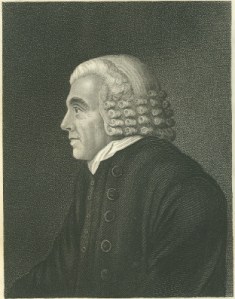
Repentance unto Life by John Brown of Haddington

Q. 87 What is repentance unto life?

A. Repentance unto life is a saving grace, whereby a sinner out of a true sense of his sin, and apprehension of the mercy of God in Christ, doth, with grief and hatred of his sin, turn from it unto God, with full purpose of, and endeavor after new obedience.

This catechetical exploration of repentance, written by John Brown of Haddington, helpfully explores the full extent to which Christians should consider when forsaking sin. For most Christians familiar with American Evangelicalism, you will be shocked by thoroughness and intricate consideration given to turning from sin, and turning to God. He considers, in turn: 1) Worldly Sorrow, 2) Legal Repentance, 3) the Grace of Repentance, 4) Five Aspects of Gospel Repentance, 5) New Obedience, and 6) Concluding Observations. Many of us have never thought so deeply about any subject in our lives, much less repentance. May these question and answers provoke deeper and truer repentance in us all.

Q. Why is this mean of salvation called repentance unto life?

A. Because it proceeds from, and is an evidence of spiritual life, and issueth in eternal life.
Continue reading

Singing Through Tears

When the wounds and scars of this world come, we have several options in front of us. Numb the hurt by denying reality (drugs, drunkenness, other-worldly asceticism)? Wallow in the pain and let it consume us? Lash out in rage at that which causes pain?

Or, we can join the Psalmist and cry out to God, singing through the tears and waiting for the Lord to arise and banish our foes and fears. If you’re suffering, consider the two songs below as good examples of ultimately looking to the Lord through the pain. Your Good Shepherd does not promise to keep you from the valley of the shadow of death, but He does promise to bring you through to the green pastures and still waters on the other side.
Continue reading

Just In Case You Missed ‘Em

With the overwhelming influx of information available, discerning readers must become selective in what they give their time to read. Just in case you missed ‘em, here are some links I found valuable, and hope you will also.

Horton’s Recent Chapter on Scripture
Dr. Rev. Michael S. Horton contributed to Christian Theologies of Scripture: A Comparative Introduction with his chapter “Theologies of Scripture in the Reformation and Counter-Reformation: An Introduction.” Download it from the link above.

Before Rob Bell, There Was David Swing
PCA pastor-scholar Sean Lucas reminds us of the liberalizing David Swing, and why the most popular pastor of the biggest church in Chicago is no longer there.
Continue reading

Ridderbos Uses Circumcision to Understand the Law for Christians

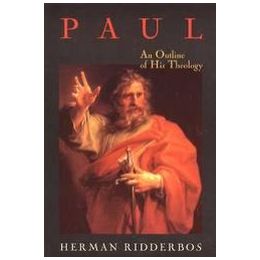
Ridderbos_PaulOutlineTheologyRidderbos reflects on “how much Christ, the law, the Spirit, and love constitute a unity may appear from a comparison of the following parallel pronouncements.” I found his insights illuminating, and tried to reconstruct some of what he shows below.

Galatians 5:6 For in Christ Jesus neither circumcision nor uncircumcision counts for anything, but only faith working through love.
Galatians 6:15-16 For neither circumcision counts for anything, nor uncircumcision but a new creation.  And as for all who walk by this rule [= canon], peace and mercy be upon them,
1 Corinthians 7:19 For neither circumcision counts for anything nor uncircumcision, but keeping the commandments of God.


Philippians 3:3 For we are the real circumcision Who worship by the Spirit of God and glory in Christ Jesus and put no confidence in the flesh

The true “[S]pirituality” that the New Covenant in Christ produces is the work of love as it keeps the commandments of God born out of regeneration in the Spirit.

Paul: An Outline of His Theology p. 285ff.

Just In Case You Missed ‘Em

With the overwhelming influx of information available, discerning readers must become selective in what they give their time to read. Just in case you missed ’em, here are some links I found valuable, and hope you will also.

John Owen on Pastoral Prayer
Looking for further resources on how to pray better? Rev. Danny Hyde discusses Owen’s thoughts on public prayer at Meet the Puritans, including how to “improve” upon Christ’s gifts and what it might mean to “study prayer” and “pray while we study.”

Ussher on the Corporate Nature of Baptism
“Thus if we were wise to make a right use of [attending to the sacrament]; we might learn as much at a Baptism as at a Sermon.”

Apostasy Now
The always interesting Lauren Winner writes for Slate to query whether it is even possible to apostasize from mainline Christianity. “Would that America’s Protestant mainline could produce an apostate. For one might say that a group that lacks the necessary preconditions for making apostates can’t make disciples either.” Perhaps you’ve never thought it a good thing, but could you be kicked out of your church? Is there a proportionate relationship between the severity of exclusion and the warmth of inclusion?

Spiritual Alzheimers
“…when you can remember Him no more, God will remember you. ‘Even these may forget, yet I will not forget you. Behold, I have engraved you on the palms of my hands.’”

Contra Accountability Groups
Tullian says “Reminders Are More Effective Than Rebukes” when it comes to living out the Christian life.

Dennis Johnson on Preaching the Gospel
From his magnum opus Him We Proclaim, “…the same gospel that initially called us to faith is the means that perfects us in faith.”

The Bavinck Institute
A wealth of resources. How did I just now hear about this?! Download The Bavinck Review, surf for dissertations on Bavinck that may be downloaded, and find information on a debate regarding Bavinck’s view of Two Kingdoms theology.

The Fun Cult
“Entertainment is a huge American idol. Q/A #1 of the American catechism is this: ‘The chief end of man is to glorify fun and enjoy it forever.'” Bonus: great Trueman quotes on deconstruction of entertainment.

Don’t Waste Your Life

Dear Collegians,

I hope your second semester is off to a good start, and that there aren’t too many cobwebs from Christmas break. It was great to see so many of you when you were back home, and if I didn’t get a chance to see you then, hopefully I’ll get a chance to connect with you over Spring break or another weekend you stop by Garner.

As you’re dealing with the business of life, studies, relationships, and work, it’s easy for all of us to get so caught up in the details that we never spend any time actually living for anything. But let me warn you – don’t waste your life. Don’t spend all of your time living for the details and missing the big picture. Not only is it possible, it is natural for Americans to be consumed by pleasure and business and a whole host of other temporal, trivial issues in life. But there’s only one way to live so that you don’t waste your life. And that is to live in such a way that demonstrates that Jesus is more valuable and priceless to you than anything else in this world. He’s more valuable to you than money or marriage, or power or pleasure.

Our Lord Jesus finds our desires not too strong, but too weak.

We are half-hearted creatures, fooling about with drink and sex and ambition when infinite joy is offered us, like an ignorant child who wants to go on making mud pies in a slum because he cannot imagine what is meant by the offer of a holiday at the sea. We are far too easily pleased. – C.S. Lewis, The Weight of Glory

If you’d like to learn more about how to live in such a way as to not waste your life, I’d encourage you to download this free book – Don’t Waste Your Life (.pdf format). Its written by a pastor who has mentored me through the years named John Piper, and you can find more about him and his ministry here.

You are in the years of your life when you are making a lot of decisions that will define who you are and what you do for years to come. My prayer for you (and for myself) is that you wouldn’t come to the end of your life and sadly whisper, “I’ve wasted it.” If you ever want to talk about this or anything else on your mind, get a hold of me: pastorbrian AT zionerchurch Dot com or 641.923.3152. I’d love to talk. Until then, don’t waste your life but let’s live for the glory of the Lord Jesus Christ!

Hope to see you soon,
Pastor Brian

Don’t Waste Your Life

Looking Ahead for 2011

Dear Zion,

It seems like the New Year has snuck up on us again, and with 2011 comes all sorts of new experiences: new hopes and new fears for what the new year may bring, new possibilities, as well as the feelings of regret and loss that can come as time marches on. Many people spend the New Year thinking about new resolutions to make and ways to change. But how should Christians think about the inauguration of 2011? How are we to “redeem the time” (Ephesians 5:16)? While there are surely many ways to think about these issues, here are some especially pertinent, biblical concepts to consider.

The Sovereignty of God in 2011
No matter what the new year brings, we can be sure of this: God is in control of 2011. All times are in His hand, and since He is the Alpha and the Omega, the First and the Last (Revelation 1:8), we know that He makes the ends known from the beginning (Isaiah 46:10). Every day that we live in 2011 has already been written in His book (Psalm 139:16), and nothing that happens to us can happen apart from His will. Life and death, health and sickness are in His hands (Deuteronomy 32:39). Neither a sparrow (Matthew 10:39 – 31) nor a hair from your head (Luke 21:16 – 18) can fall apart from God’s will. So for those who love God and are called according to His purpose, the future of the new year doesn’t need to be a scary thing, because He has promised that all things will work together for our good (Romans 8:28). As we make our plans for 2011, we should recognize God’s absolute power and control over all the decisions we make, and ultimately entrust ourselves and our plans to Him (James 4:13 – 17).

The Second Coming and Missions
It could be that 2011 is the year in which Jesus Christ returns “to judge the quick and the dead,” and to bring His people home to God. I can’t think of a more glorious idea! We pray with the saints down through the ages, “Come quickly, O Lord!” (I Corinthians 16:22; Revelation 22:20). When the date is written out 2011 A.D., that stands for anno domini, or “the year of our Lord,” and it reminds us that time is waiting for Christ to return. The Second Coming of Jesus is the blessed hope for all Christians, and one we eagerly await. As we wait, we are to strive to live in a manner worthy of His calling.

But we are also to spread the Good News of God. If Jesus doesn’t return in 2011, may the Lord use this season for the advancement of His Kingdom! Jesus reminds us that in every age “the fields are white for the harvest,” and so we should “pray the Lord of the harvest to send out workers into His harvest” (Luke 10:2; John 4:35). How may God be calling you to support missionaries and evangelistic efforts through prayer, finances, and your own time?

Personal Holiness and Spiritual Growth
No matter what God’s will for 2011 may include, you can be sure of this, that part of God’s will for you is for you to grow in holiness (I Thessalonians 4:3). That is true in all times and all places. Many New Year’s Resolutions include weight loss and stopping bad habits, but how many of us take time to plan how to grow in our faith? How many of us purposefully seek deeper discipleship and richer communion with the Triune God? If it would help you, notice the Bible reading plan included in this newsletter[1]. Perhaps you would like to join or start a prayer meeting. May God grant us all a zeal to be holy, even as He is holy, in 2011 (I Peter 1:16).

Praying with you for faithfulness in 2011,
Pastor Brian
__________________________________________________________________
[1] This is referring to M’Cheyne’s Bible Reading Plan.