What NA28 May Mean For the Future of Reasoned Eclecticism

DBWallaceNT manuscript guru Dan Wallace recently wrote at his blog on the newest edition of the critical text of the Greek New Testament, “Nestle-Aland 28: The New Standard in Critical Texts of the Greek New Testament.” There was a lot of interest there, but a few things stood out.

As INTF [Ed. – Institut für neutestamentliche Textforschung in Münster] worked through the Catholic letters, they came to see much greater value of the Byzantine manuscripts than they had previously. In Wachtel’s presentation, he noted that the NA27 displayed “prejudice against the Byzantine tradition” while the NA28 recognized the “reliability of the mainstream tradition.” This is a welcome change in perspective, made possible because of exhaustive collations.

The changes are so great that the apparatus symbols will change as well, from a gothic “M” to “Byz.” Wallace calls it a “sea change” in Münster for how the text is approached.

Secondly, Wallace says “a step back” has been taken in the editorial process.

The previous edition was edited by three Protestants (Kurt Aland, Barbara Aland, Bruce Metzger), one Roman Catholic (Carlo Martini), and one Greek Orthodox scholar (Ioannes Karavidopoulos). The latest edition lists as its editors only “the Institute for New Testament Textual Research… under the direction of Holger Strutwolf.” … the final decisions about the text are solely in the hands of Münster.

No ecclesiastical information was listed, and it sounds like there is a fairly firm bottleneck in the final decision making process. Textual scholars would be able to say if this is typical or a departure from the norm, but Wallace noted it as a step back.

So then, on come the questions.

  1. Is this a change in reaffirming the role of the Byzantine, Majority text? (See Wallace’s article for some redefinition of what “Majority/Majorities Text” will mean going forward.) Is this a step toward bringing Received Text and Critical Text proponents together?

  2. Continue reading

Theology for Pastors from John Calvin

About

Resources

Events

Spread!

Dr. Scott Manetsch lectures on Calvin’s Pastoral Theology. This video was taken from the RCA Integrity conference, which we’ve linked to in the past.

There are a wealth of resources there for Midwest ministry, so look for more information from that in the future.

In the meantime, ponder what Calvin’s theology and praxis means for ministry today.

Home to Reformation Midwest

6 Truths to Stand On When Voting

Dear Zion,
With the campaign advertisements, donor & polling phone calls, it is clear that election season is upon us! Christians are, often rightly, concerned over where the country is going, what candidates do and say, and the pressure cooker of the election season only adds to that. But what truths from the Bible can we stand on, even leading up to the election? Here are six:

  1. God is sovereign over whoever is elected in November. It is clear from Scripture that ultimately the White House, as well as every position of power, comes from God’s power and authority. He “brings kings down and He sets kings up” (Daniel 2:21). The rise and fall of nations is in His control (Daniel 4:30 – 37). If even such little things as the life of sparrows (Matthew 10:29) and the rolling of dice (Proverbs 16:33) and under God’s control, will God not also oversee the heart and decisions of rulers (Proverbs 21:1)? The citizens of America will elect their leader on Nov. 6 by voting, but this is simply the means that God uses to install the leader He has chosen.
  2. God can use bad leaders to accomplish good things. Even if the person who gets elected is not the person we wanted, God is still able to accomplish His purposes! In fact, God always accomplishes what He wants, and no force in heaven or earth can thwart Him (Ephesians 1:11)! God called the pagan king Cyrus to be His “messiah” in setting His people free from exile (Isaiah 45:1 – 4). The apostle Paul reminds us that even an emperor as wicked and notorious as Nero was still the Lord’s civil minister keeping peace, rewarding righteousness and punishing evil (Romans 13:1 – 7). Ultimately, all rulers, kings and presidents will be subdued before the King of Kings and President of Presidents, Jesus Christ (Psalm 2)!
  3. Therefore, our ultimate hope is in God, not politics. Continue reading

Don’t Search Google for Theology

Shane Lems of Reformed Reader has some great insights into how to utilize the internet for finding good theology:

Finally, I’d recommending using Google as little as possible when doing biblical/theological research. Google’s methodology in finding websites might be helpful in some areas, but not theology. Google works with clicks and cash; good theology isn’t determined by popularity or money, but by Scripture as read and interpreted in and with the historic Christian church. The top search results on Google are not necessarily the best sources for research and study. Rather than Google, email your pastor, elder, or another wise/mature Christian and ask them where they would recommend getting reading material on a certain subject. Or, look for information on websites whose authors are accountable to elders, creeds/confessions, and/or denominational standards. Continue reading

Ten Propositions from Christ the Lord

After the Lordship-Salvation controversy between John MacArthur and Zane Hodges in the 1980’s, the White Horse Inn crew released Christ the Lord: The Reformation and Lordship Salvation (Baker, 1992). At the end of their collection of essays, ten propositions are put forward. Here they are for you to chew on. Thoughts?

  1. It is impossible that saving faith can exist without a new nature and thereby new affections (love, a desire for holiness, and so on).
  2. Saving faith is nevertheless not the same thing as such affections or desires and does not include in its definition the effects of which the new birth is the cause.
  3. It is not enough to say that we are justified and accepted by grace alone, for even Rome has agreed that is is only by God’s grace that we can become transformed in holiness. We must add that we are justified by grace alone through faith alone, and it is a great error to change the meaning of faith to include acts of obedience and repentance in an effort to make a disposition other than knowledge, assent, and trust a condition of justification.
  4. The definition of saving faith is: Knowledge, which we take to mean the intellectual grasp of the relevant historical and doctrinal facts concerning Christ’s person and work and our misery; Assent, or the volitional agreement of our hearts and minds that these facts are true; and Trust, which is the assurance that these facts that are true are not only true generally, but true in my own case. In this way I abandon all hope for acceptance with God besides the holiness and righteousness of Christ.
  5. Continue reading

The Cambridge Declaration

Ever heard of The Cambridge Declaration?

Introduction
In April 1996, the Alliance of Confessing Evangelicals held its first major meeting of evangelical scholars. The Cambridge Declaration, first presented at this meeting, is a call to the evangelical church to turn away from the worldly methods it has come to embrace, and to recover the Biblical doctrines of the Reformation. The Cambridge Declaration explains the importance of regaining adherence to the five “solas” of the Reformation.

April 20, 1996
Evangelical churches today are increasingly dominated by the spirit of this age rather than by the Spirit of Christ. As evangelicals, we call ourselves to repent of this sin and to recover the historic Christian faith.

In the course of history words change. In our day this has happened to the word “evangelical.” In the past it served as a bond of unity between Christians from a wide diversity of church traditions. Historic evangelicalism was confessional.

Sola Scriptura: The Erosion of Authority

Scripture alone is the inerrant rule of the church’s life, but the evangelical church today has separated Scripture from its authoritative function. In practice, the church is guided, far too often, by the culture. Continue reading →

“What I’m Looking For” Mashup

Blaise Pascal (1623-1662)

What else does this longing and helplessness proclaim, but that there was once in each person a true happiness, of which all that now remains is the empty print and trace? We try to fill this in vain with everything around us, seeking in things that are not there the help we cannot find in those that are there. Yet none can change things, because this infinite abyss can only be filled with something that is infinite and unchanging—in other words, God himself. God alone is our true good.

Pensées #425

C. S. Lewis:

If we are made for heaven, the desire for our proper place will be already in us, but not yet attached to the true object, and will even appear as the rival of that object. . . . If a transtemporal, transfinite good is our real destiny, then any other good on which our desire fixes must be in some degree fallacious, must bear at best only a symbolical relation to what will truly satisfy. Continue reading

Impassibility Unto Passion

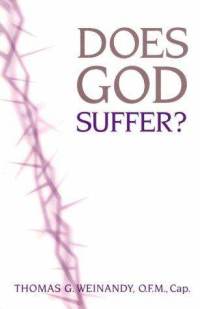
I don’t think it is contentious to say that the doctrine of God’s impassibility is falling on hard times these days. According to WCF II.1 states that God is “a most pure spirit, without body, parts or passions; immutable, immense, eternal…” Some level a charge of “Hellenistic” (read: Greek/pagan/gnostic) tones on these ideas, but I think they are eminently biblical.

I love how Roman Catholic (gulp) scholar Thomas Weinandy talks about the doctrine of immutability, and I think these words apply also to impassibility as well:

One should not be misled into thinking that God’s immutability is like the immutability of a rock only more so. What God and rocks appear to have in common is only the fact that they do not change. The reason for their unchangeableness is for polar-opposite reasons. The Rock of Gibraltar does not change or changes very little because it is hardly in act at all, and the change that it does undergo is mainly from outside causes—wind and rain. God is unchangeable not because he is inert or static like a rock, but for just the opposite reason. He is so dynamic, so active that no change can make him more active. He is act pure and simple . . .

What the critics consistently fail to grasp is that God’s immutability is not opposed to his vitality. Nor need one hold together in some dialectical fashion his immutability and his vibrancy, as if in spite of being immutable he is nonetheless dynamic. Rather, it is precisely God’s immutability as actus purus that guarantees and authenticates his pure vitality and absolute dynamism. Thus, when the critics assert that because Aquinas and the tradition believe God to be immutable they espouse a static and inert conception of God, they but demonstrate their own lack of understanding.

(Thomas Weinandy, Does God Suffer? 78–79, 124)

Some day, I would love to do a deeper study on this view of immutability/impassibility, and the sacred words of Luke 9:51:

When the days drew near for him to be taken up, he set his face (πρόσωπον ἐστήρισεν) to go to Jerusalem.

I know these texts bring the Incarnation into play, but there is still relevance here, I argue. Jesus was unable to be moved from going to His passion, His mission to die for His elect on the cross in Jerusalem. He wasn’t unmovable because he was like the Rock of Gibraltar, but rather because – like a laser – He pursued His Father’s will to the end. I also think of John 13:1 and other texts in this context as well.

With all His sufferings, full in view,
And woes to us! unknown –
Toward the task, His spirit flew,
‘Twas love that urged Him on.

(William Cowper “Savior! What A Noble Name!”)

The divine flame of love (SoS 8) is too strong to be moved or muted. Hallelujah!

John Calvin’s Birthday

July 10 is the 503rd anniversary of John Calvin’s (1509 – 64) birthday. Many blame Calvin for coming up with a novel and unbiblical theology that centered on predestination. I think that, not only was Calvin’s theology eminently biblical, but it wasn’t novel either. I’ve looked before at similarities between Calvin and Thomas Aquinas. On this his birthday, consider a few quotes comparing Calvin’s so-called “5 Points” with select quotes from the early Church Fathers.

TOTAL DEPRAVITY
Justin Martyr (A.D. 150): “Mankind by Adam fell under death, and the deception of the serpent; we are born sinners…No good thing dwells in us…For neither by nature, nor by human understanding is it possible for me to acquire the knowledge of things so great and so divine, but by the energy of the Divine Spirit…Of ourselves it is impossible to enter the kingdom of God…He has convicted us of the impossibility of our nature to obtain life…Free will has destroyed us; we who were free are become slaves and for our sin are sold…Being pressed down by our sins, we cannot move upward toward God; we are like birds who have wings, but are unable to fly.”

Origen (A.D. 185): “Our free will…or human nature is not sufficient to seek God in any manner.”

UNCONDITIONAL ELECTION
Irenaeus (A.D. 198): “God hath completed the number which He before determined with Himself, all those who are written, or ordained unto eternal life…Being predestined indeed according to the love of the Father that we would belong to Him forever.” Continue reading