
Explaining Repentance

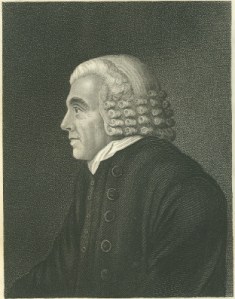
Repentance unto Life by John Brown of Haddington
Q. 87 What is repentance unto life?

A. Repentance unto life is a saving grace, whereby a sinner out of a true sense of his sin, and apprehension of the mercy of God in Christ, doth, with grief and hatred of his sin, turn from it unto God, with full purpose of, and endeavor after new obedience.

This catechetical exploration of repentance, written by John Brown of Haddington, helpfully explores the full extent to which Christians should consider when forsaking sin. For most Christians familiar with American Evangelicalism, you will be shocked by thoroughness and intricate consideration given to turning from sin, and turning to God. He considers, in turn: 1) Worldly Sorrow, 2) Legal Repentance, 3) the Grace of Repentance, 4) Five Aspects of Gospel Repentance, 5) New Obedience, and 6) Concluding Observations. Many of us have never thought so deeply about any subject in our lives, much less repentance. May these question and answers provoke deeper and truer repentance in us all.

Q. Why is this mean of salvation called repentance unto life?

A. Because it proceeds from, and is an evidence of spiritual life, and issueth in eternal life.
Continue reading

Theological Pedigree Does Not Determine Orthodoxy nor Faithfulness

Consider the following:Gomarus

  • Theodore Beza (1519 – 1605) was handpicked by Calvin to continue the Academy at Geneva.
  • While teaching there, Beza instructed a new student Jacob Arminius (1560 – 1609).
  • Arminius became an instructor at the University of Leiden, where he taught Gisbertus Voetius (1589 – 1676).
  • Voetius spent seven years at Leiden. Among his teachers were both Gomarus and Arminius.

Few theologians are known for a higher Calvinism than Beza or Voetius. And yet Arminius fits squarely within their pedagogical history. What conclusions can we draw from this?

  1. We must not become either too mechanical – as if good teachers automatically produce good students – or too indifferent (e.g., “it doesn’t matter who my professors are; I’ll turn out just fine”). Yes, Arminius studied under Beza, but he also learned from Johann Kolmann. True, Voetius learned from Arminius, but he also sat at Gomarus’ feet. Teachers do exert an effect on their students, but it is not automatic or without nuance.
  2. I thank God for the professors I had at Westminster West, but a theologically sound faculty is no guarantee for theological soundness. Students blessed to have excellent teachers should be cautious to proceed in their fathers’ footsteps, and never depart.
  3. Poor theological education is no final impediment to your theological growth. If you lament your professors or education, Voetius is an example of rising above your education and proving to be a master at his craft despite some inadequate examples.

The Old Filth of the Heart

The lumen naturæ (or “light of nature;” Westminster Confession I.1) does a lot of heavy lifting, especially when we notice how little consideration it often receives. The light of nature, also known by its alias “natural revelation,” is that which we know “by nature” – or just being human in creation – and it turns out that this is quite a lot.

But one of the most important things natural revelation does for us, and this is where The Marrow lays the emphasis this week, is that it reminds us that humans are covenantal servants, and that we are “hardwired for law.” The works covenant that God made with Adam at creation included the law that disobedience would be recompensed with death, and that obedience would be rewarded with life and blessing. As Adam’s federal progeny, our DNA comes built-in with the principle that we must work before we may have our wages, and that the harder we work, the better the wage. However, living in a post-Genesis 3 world means that even our grandest efforts have only earned us death (Romans 6:23) and our brightest righteous efforts are filthy rags (Isaiah 64:6). Continue Reading at TheMarrow.Org…

GTD on Pocket PC

Repost from an old article at What the Thunder Said… circa 2006.  A lot has changed since then – for example, I now use an HTC Touch Pro 2 rather than the (HTC built!) HP iPAQ 5555 – but the reliance on mobile tech for GTD, productivity, and so much more remains the same.  Some day I’ll update what I use now in mobile technology, but this was an important benchmark.

Reading: The following article… Googlenews… praying for Katrina victims
Enjoying: State Fair “Sweet Martha Cookies” chocolate chip cookies and milk
Listening: Nothing. Its too early…

According to this article, more and more people – from professionals to teens – are taking advantage of PDA devices to run their lives more smoothly. Where teenagers may be simply chatting and messaging each other with wireless devices, professionals are getting their email wirelessly, working with mini applications like Pocket Word and Excel, and getting directions from voice activated and self-speaking GPS locators on their unit.

Of course, this is nothing new to blund. As a “seminary student,” I’ve been relying on my Hp iPAQ 5550 for a long time now to keep me going. Besides maintaining three email accounts, surfing the net, managing all the paperwork for my part time job, creating papers, spreadsheets, and powerpoint presentations (with wireless printing, nonetheless), listening to my mp3 collection, and running my blund blogs, there are few things my little pocket pc cannot do. I get all my news, weather, sports scores, movies, music videos, and daily paper on the little gadget. Perhaps even more amazing than all of this, is that I haven’t spent a dime on software, and other than the purchase for the initial machine (which should run anywhere from $300 – $500), I have spent only $130 on memory cards, an extra battery, a foldable keyboard, and a Bluetooth mouse (I’d like to get Bluetooth or nice corded earphones). A Pocket PC’s flexibility and useability are tremendous. Continue reading

New Reformed Church in Twin Cities

Getting biblically solid, confessionally Reformed churches in the Midwest is not easy, and St. Paul & Minneapolis MN prove no exception. So it is exciting to see that fellow WSC grad Rev. Ryan Kron is starting a church plant in the Minneapolis and Eden Prairie area. So if you’re in the southwest Metro area, give Emmaus Road Reformed Fellowship a look.

Finding Tunes for the Text

Dear Zion,

Last time we saw that what we sing to God in our lyrics and musical text is the most important thing for selecting music in worship services. In fact, what we sing even takes precedence over how we sing, or in other words, the tune, arrangement, and harmony. We can all agree that the music should reflect the mood and substance of our songs, but what other guidelines should churches consider when thinking about the musical tune of the text?
Continue reading