Theology for Pastors from John Calvin

About

Resources

Events

Spread!

Dr. Scott Manetsch lectures on Calvin’s Pastoral Theology. This video was taken from the RCA Integrity conference, which we’ve linked to in the past.

There are a wealth of resources there for Midwest ministry, so look for more information from that in the future.

In the meantime, ponder what Calvin’s theology and praxis means for ministry today.

Home to Reformation Midwest

Pro Omnibus Sanctis

Celebrated in the earliest days of the Church as Αγίων Πάντων (All Saints), this is a fantastic rendering of the eighteenth century hymn by Indelible Grace. As you ponder the church militant (Christians laboring for Christ on yet on earth) and the church triumphant (those saints who have entered into their rest), may this song encourage you to labor on til that yet more glorious Day.

Revitalizing A Church

About

Resources

Events

Spread!

Mark Dever interviews Andy Davis for 9Marks on Davis’ remarkable experience witnessing God’s favorable blessing on his church. This is “must listen” material for all Christians who long to see their congregations reformed and always reforming.

Read more and download the interview at the 9Marks website.

Reforming the Local Church

About

Resources

Events

Spread!

Reforming the Local Church

Reforming your local church is no easy task. Let me begin by stating that the substance of what follows is advice based on personal experience in three pastorates, as well as my interaction with pastors from across the country who have come to embrace Reformation theology and attempted to incorporate that theology into the life of their respective churches.

First Things First
Two preliminary observations are in order. First, it must be understood that there is no guarantee that what has worked in one place will achieve the same results elsewhere. What follows is an overview of what I and others have done and should not be viewed as a sure-fire formula. If anything, I pray that this summary will be used as a guideline for pastors as they think through the comprehensive challenges of reforming a local church.

Second, reforming a church ordinarily begins with the pastor. This is only right because it is through the preaching and teaching of this biblically ordained office that the doctrinal direction is established. If the pastor and elders are not convinced that Reformational theology is the proper theological framework, not much progress will be made. Any effort on the part of the laity (no matter how noble the intention) to teach contrary to the doctrine of the pastor and elders is disruptive to church order. Once laypeople have become convinced of Reformational theology, however, they can be instrumental in bringing these truths to bear in the life of their local church if: (1) they have access to the pastor and elders; (2) they have the confidence and support of the pastor and elders; and (3) they proceed with permission and caution. I will begin with advice for pastors and conclude with a reflection for lay reformers.

The Ground on Which You Stand
Pastors, know your context. There is a huge difference between reforming an existing church that stands within the Reformed tradition but has drifted from its standards, and bringing Reformational theology into a new context where it has never been intentionally or formally held. Continue reading this article by Ken Jones at ModernReformation…→


Kinds of Plagiarism in Ministry

Plagiarism is an important issue for pastors to think over as well, it might be worthwhile for ministers to consider this issue. Especially since I would expect the temptation for a young pastor – struggling to get his sermon done and in awe of “celebrity pastors” – might look very different for an established veteran preacher – wanting to cull the best of borrowed sayings and sources over a long career.

Keller on “Explosive” Contextualization

Quote

From his forthcoming Center Church:

To illustrate what is needed for effective contextualization, let’s turn to the world of demolition. Say you are building a highway and want to remove a giant boulder. First, you drill a small shaft down into the center of the rock. Then you put explosives down the shaft into the core of the stone and detonate them. If you drill the shaft but never ignite the blast, you obviously will never move the boulder. But the same is true if you only blast and fail to drill—putting the explosives directly against the surface of
the rock. You will simply shear off the face of it, and the boulder will remain. All drilling with no blasting, or all blasting with no drilling, leads to failure. But if you do both of these, you will remove the rock.

To contextualize with balance and successfully reach people in a culture, we must both enter the culture sympathetically and respectfully (similar to drilling) and confront the culture where it contradicts biblical truth (similar to blasting).

From Ancient to Therapeutic: Pastoral Theology After 1920

Tom Oden – Methodist minister and promoter of paleo-orthodoxy – outlines what drove him to publish Care of Souls in the Classic Tradition. He began by noting how often 19th century handbooks on pastoral care/theology referenced the ancients on this issue. He collected the most prominent volumes on pastoral theology from various denominational backgrounds, and then counted the number of times they referenced “the MVPs” of Christian care – stalwarts such as Augustine, Baxter, Luther, and Calvin. Here were his results:Oden comments, “This clearly establishes the point that at the turn of the century [ed – 20th] the classical tradition was alive and well, recalled, and considered important to the practice of pastoral care.”

But Oden then went on, and collected what he and others considered the most popular monographs on pastoral theology, that had the broadest consensus for use and excellence. When he searched those modern volumes for the classical tradition of shepherding, he was disappointed: Continue reading

He Who Has Ears: Listening to Sermons

Featured

One of the things a pastor and a congregation spend a lot of time on together is the sermon that is preached every Lord’s Day in the worship service. The minister spends time preparing and delivering the message, and the congregation spends time hearing it and living their lives based off of it. But have you ever thought about how to hear a sermon? How can we obey Jesus’ command to “be careful how you hear” (Luke 8:18)? Consider a few ideas with me:

  • Believers should prepare themselves to hear. The Apostle Peter commands that we “desire the sincere milk of the Word like newborn babies,” and that one of the ways we prepare that spiritual “thirst” within us for God’s Word is by laying aside all sin (I Peter 2:1 – 2). Sin acts like wax in our ears, and keeps us from hearing the life-giving words we so desperately need. Do not allow Saturday night – or the week before Sunday – as an opportunity for sin, but instead lay aside sin by faith and focus on “thirsting” to hear from the Lord in the sermon.
  • Believers should prepare through prayer. One of the best ways to create this spiritual thirst in preparing is through prayer. We say with the psalmist, “Lord, open my eyes, that I would behold wondrous things out of Your Law in the sermon this Sunday” (cf. Psalm 119:18). Ask God to reveal to you His will for your life in the sermon; do it every Sunday! The Apostle Paul asked the Ephesians to pray for him as he preached, and to do so constantly (Ephesians 6:18 – 19). We should pray this way for our Sunday school teachers, Bible study leaders, and especially our ministers and elders.
  • Believers should test the sermon against God’s Word. Paul praised the Bereans because they “searched the Scriptures daily” to see if Paul’s message lined up with Scripture (Acts 17:11). As Christians, we are to “test everything; hold fast what is good” (I Thessalonians 5:21). Ministers must not preach on their favorite topics, heart-warming stories, practical advice for better living, politics, or anything else – but only what the Lord says in Holy Scripture. A congregation can hold their minister accountable by carefully testing what he says.
  • Believers should receive the sermon in a godly attitude. Continue reading

Suaviter in Modo, Fortiter in Re

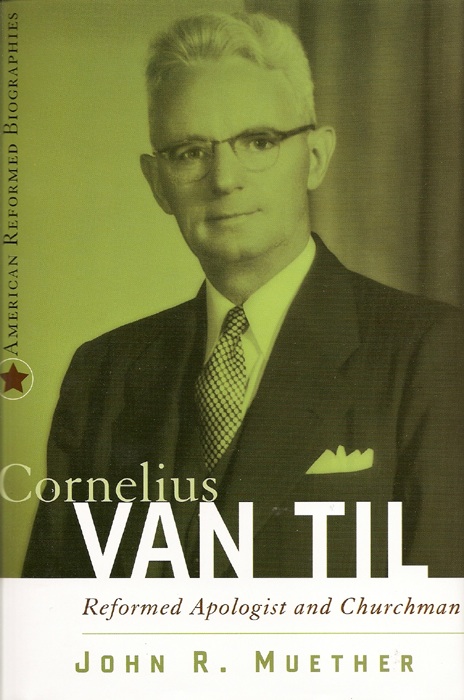
I’ve been reading John Muether’s excellently engaging biography of Kees Van Til for the American Reformed Biographies series. There has been so much that challenges, convicts, and encourages. Though introduced early on, one idea that Muether brings out was Van Til’s ability to be suaviter in modo, fortiter in re. Broadly rendered as “gentle in manner, forceful in deed,” Van Til’s personal interactions and writing were a demonstration of this truth. One student, Grady Spires, is recorded as noting, “I recall his [Van Til] debating liberal and neo-orthodox champions at Boston University. He graciously, respectfully, but incisively told them that they were going to hell.”[*]

A real mark of this quality is when the compliment is paid by opponents, and not just comrades. It is one thing to be self-congratulatory, and quite another when even your adversaries note your ability to be strong in substance while delicate in communication. Evidently, this was true of Van Til. Though he was no presuppositionalist, Lewis Smedes praised in him, “it is possible to be profoundly critical of all compromises with the truth, and yet always cum suaviter modo” (209). Continue reading