Catholics warn of ‘national conflict’ over gay marriage. I’m glad some are speaking up for what they believe, and that they are framing the discussion in terms of how the legislation would force conscientious objectors into a “bigot” category. But the warnings, and pitting Church vs. state, smacks too much of a theology of glory vs a theology of the cross to me.
Christianity vs Evangelicalism
Reply
 Maybe you saw this linked from The Gospel Coalition, but if you haven’t read President of Asbury Dr. Timothy C. Tennent’s fall convocation entitled, “The Clarion Call to Watered Down Evangelicalism: Our Mission to ‘theologically educate,’” well then you should go read it now.
Tennent starts off by noting, “Tragically, Niebuhr’s devastating critique [of liberalism] is on the brink of being equally applicable to contemporary, evangelical Christianity.” From there, he turns both barrels on the current state of evangelicalism in America today. Here are some of the heavier quotes:
If liberalism is guilty of demythologizing the miraculous, we have surely been guilty of trivializing it. If liberalism is guilty of turning all theological statements into anthropological ones, surely we must be found guilty of making Christianity just another face of the multi-headed Hydra of American, market-driven consumerism. If liberalism can be charged with making the church a gentler, kindler version of the Kiwanis club, we must be willing to accept the charge that we have managed to reinvent the gospel, turning it into a privatized subset of one’s individual faith journey. I realize that there are powerful, faithful churches in every tradition who are already modeling the very future this message envisions, but we must also allow our prophetic imagination to enable us to see what threatens to engulf us.
I Am Not My Own

For what is a man? What has he got? / If not himself – Then he has naught.
To say the things he truly feels / And not the words of one who kneels.
The record shows I took the blows / And did it my way. / Yes, it was my way.
“My Way” Frank Sinatra
It’s my life / And it’s now or never / I ain’t gonna live forever
I just want to live while I’m alive / (It’s my life)
My heart is like an open highway / Like Frankie said I did it my way
I just want to live while I’m alive / ‘Cause it’s my life
“Its My Life” Bon Jovi
Tell my mother, tell my father / I’ve done the best I can
To make them realize this is my life / I hope they understand
“Second Chance” Shinedown
=======================
My only comfort in life and death is that I am not my own, but belong body and soul, in life and death, to my faithful Savior Jesus Christ.
Heidelberg Catechism Q. #1
“Or do you not know that your body is a temple of the Holy Spirit within you, whom you have from God? You are not your own, for you were bought with a price. So glorify God in your body.” 1 Corinthians 6:19-20
Owen’s Two Definitions of Sanctification
 Compare these two definitions of sanctification. The first comes from John Owen’s Works, the second from the Savoy Declaration of Faith, a document Owen, Goodwin,and many other influential congregationalist ministers had a large role in forming.
Owen’s Works, 3:386
Sanctification is an immediate work of the Spirit of God on the souls of believers, purifying and cleansing of their natures from the pollution and uncleanness of sin, renewing in them the image of God, and thereby enabling them, from a spiritual and habitual principle of grace, to yield obedience unto God, according unto the tenor and terms of the new covenant, by virtue of the life and death of Jesus Christ.
Savoy Declaration of Faith
Chapter XIII: Of Sanctification
They that are united to Christ, effectually called and regenerated, having a new heart and a new spirit created in them, through the virtue of Christ’s death and resurrection, are also further sanctified really and personally through the same virtue, by his Word and Spirit dwelling in them; the dominion of the whole body of sin is destroyed and the several lusts thereof are more and more weakened, and mortified, and they more and more quickened, and strengthened in all saving graces, to the practice of all true holiness, without which no man shall see the Lord.
What strikes you from these two definitions? The first seems to emphasize the Spirit while the second emphasizes (union with) Christ. The first mentions the imago Dei while the second mentions other facets of the ordo salutis. The first treats sin in its staining effects, whereas the latter looks at sin in its power. The first thinks of vivification in terms of “obedience” while the latter speaks of “holiness.” Only the first mentions covenant (“new covenant”), while only the latter mentions mortification. Both are clear that it is by “virtue” of Christ’s death and life/resurrection. Both are speaking of progressive, not definitive, sanctification.
So why the difference(s)? Can any Owen scholars weigh in and touch on the various emphases? Clearly, Savoy 13 is not very original to Owen or the congregationalist ministers, as it reads very similar to the WCF (click here for a comparison and scroll down). Is that the only difference here, or are there other factors at play behind these two very similar yet different definitions of sanctification?
“In the call of conscience, Dasein calls itself” is the shema of modernity
Aside
“In the call of conscience, Dasein calls itself” is the shema of modernity
Spoils of War
Image
Christians, Sports & Sundays
Euan Murray is a modern day Eric Liddell. Like Liddell, the protagonist of Chariots of Fire who didn’t run in the Olympics because his race landed on a Sunday, Murray will not scrummage for Scotland because the match would land on a Sunday.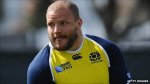
It’s basically all or nothing, following Jesus. I don’t believe in pick ‘n’ mix Christianity. I believe the Bible is the word of God, so who am I to ignore something from it?
I might as well tear out that page then keep tearing out pages as and when it suits me. If I started out like that there would soon be nothing left.
I want to live my life believing and doing the things (God) wants and the Sabbath day is a full day.
It’s not a case of a couple of hours in church then playing rugby or going down the pub, it’s the full day.
Parents in the US are increasingly facing more and more activities for their kids on Sundays. (Let’s not get started on NFL Sunday football!) Here’s an individual in Murray who is giving up a major aspect of his career to obey a command that most Christians haven’t kept their entire lives. I don’t know the first thing about Murray (or rugby!). But examples like these should make us all pause and reflect on how we are obeying the 4th Commandment.
Two Parenting Resources
Here are a few resources for busy parents trying to raise their children in the fear and admonition of the Lord for the 21st century.
5 Lessons for Parenting in the Digital Age
Facebook has recently announced that they will be rolling out even more additions to the largest social media engine to entice more users and keep current users on longer. How will this affect your family, or your parenting? The five lessons may be helpful for thinking through with your spouse as you raise young men and women to become godly, responsible consumers of technology. Continue reading
Reformed Exclusivism
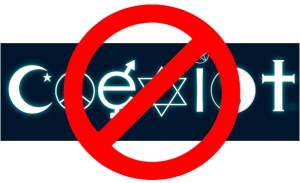 How do the various claims to truth of world religions relate to one another? Further, how should Christians think of salvation for those who have never heard? The traditional distinction to answer this question breaks into three categories:
- Exclusivism: Jesus is the only Savior of the world, and one must believe God’s special revelation culminating in the gospel of Christ to be saved.
- Inclusivism: Jesus is the only Savior of the world, but one does not have to believe the gospel to be saved.
- Pluralism: All paths are valid and lead to God.
Andy Naselli points to Christopher W. Morgan’s “Inclusivisms and Exclusivisms” in Faith Comes by Hearing: A Response to Inclusivism (WTS books). Morgan drills down into these categories, and notes that while most theologians still operate within these traditional sectors as a framework, in reality there are nine discernible categories:
- Church exclusivism: No, outside the church there is no salvation.
- Gospel exclusivism: No, they must hear the gospel and trust Christ to be saved.
- Special revelation exclusivism: No, they must hear the gospel and trust Christ to be saved, unless God chooses to send them special revelation in an extraordinary way—by a dream, vision, miracle, or angelic message.
- Agnosticism: We cannot know.*
A Short Biography of Gisbertus Voetius (1589 – 1676)
Gijsbert Voet (English – Gilbert Foot) not only overlapped with Herman Witsius (1636 – 1708) for 40 odd years, but he was an important subject in the Dutch Reformed world in which Witsius lived and breathed. Not only was Witsius heavily influenced by Voetius, but Witsius’ own work was – in a sense – an attempt to reconcile the best of Voetius and Johannes Cocceius and their respective methodologies. Any careful study into Witsius must grapple with Gijsbert Voet, and hopefully the following biography presents a clear albeit brief look into this important Dutch father.
Biography of Voetius
Born in the small fortified city of Heusden as the son of Paulus Voet and Maria de Jongeling, Gisbertus (or Gijsbert) Voetius’s early years were dominated by the experience of war. Heusden was on the front line in both a military and a religious sense, as it was situated on the southern bank of the river Meuse that would later form the borderline dividing Catholic and Protestant parts of the country. Voetius’s relatives were directly involved in the conflict with Spain. Grandfather Nicolaas Dirkszoon Voet, heir to a Westphalian noble family, died in prison in ’s Hertogenbosch where he was kept on account of his support of William the Silent. Several members of Gijsbert’s mother’s family would flee the city, leaving all their possessions behind in order to accompany the Prince of Orange to Breda. Voetius’s father meanwhile saw his own property being demolished in the rampage around Heusden. Having joined the State militias for a second time in 1592, he was killed in the siege of Bredevoort in 1597, leaving behind the sickly Maria with four children. Continue reading at Witsius On the Web…
 Brian J. Lund