Simeon’s Account of His Conversion

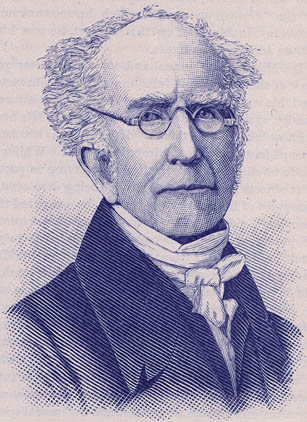
I hope you share my feeling of being encouraged to read of how God’s arresting grace breaks in on peoples’ souls. Charles Simeon (1759 – 1836) was an Anglican vicar and professor who beautifully recorded his own experience of God’s rescue in his life. Going from a life of outward religion and lavish extravagance to a vital trust in Christ and self-denial, Simeon shared the experience of change in his own life.
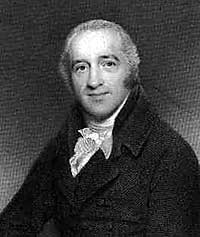
The following quote is taken from John Piper’s The Roots of Endurance (Crossway, 2002) p. 82.

In Passion Week, as I was reading Bishop Wilson on the Lord’s Supper, I met with an expression to this effect – “That the Jews knew what they did, when they transferred their sin to the head of their offering.” The thought came into my mind, What, may I transfer all my guilt to another? Has God provided an Offering for me, that I may lay my sins on His head? Then, God willing, I will not bear them on my own soul one moment longer. Accordingly I sought to lay my sins upon the sacred head of Jesus; and on the Wednesday began to have a hope of mercy; on the Thursday that hope increased; on the Friday and Saturday it became more strong; and on the Sunday morning, Easter-day, April 4, I awoke early with those words upon my heart and lips, “Jesus Christ is risen to-day! Hallelujah! Hallelujah!” From that hour peace flowed in rich abundance into my soul; and at the Lord’s Table in our Chapel I had the sweetest access to God through my blessed Savior.

Amen and amen. May every tribe, tongue and nation come to know that peace and access through Christ alone.

Where I Am This Week


I’m leaving on jet plane train with my family, my parents, and my sister’s family for a short week in the Windy City. One of our cousins will be getting married, we’ll do some tourism/sight-seeing, and hopefully have a very refreshing, relaxing time. If you’re looking for me, this is where I’ll be.If you’re in Chicago, give a shout! I’d love to meet up.

UPDATE
We made it back! Here’s a great run down of our time in Chi-town.

Productivity from Presbyterians in the 18th Century

I’ve written before on the inestimable Dr. Samuel Miller – whether on prayer, his online works, or his views of the ministry – but I stumbled across just a few biographical remarks that I found very encouraging. They even inspire in areas of productivity and GTD!

The great secret of his [Miller] being able to do so much, and to do it so well, was that he did everything systematically. He had a time for every duty, and one duty was not suffered to encroach upon another. In his personal habits and dress he was remarkably neat, without anything, however, of undue precision. In his manners he was polished and graceful, and duly attentive to all those proprieties which confer dignity upon social intercourse. Of the “clerical manners” which he recommended in his invaluable work on that subject, he was himself an admirable example.

Dr. Miller’s intellectual and moral character partook of the same beautiful symmetry that characterized his external appearance… He used to say that he loved to have a nail in every building intended for the glory of God or the good of man… There are few men who have an assemblage of intellectual and moral qualities so well fitted as were his to form a dignified character, or to secure a course of honorable and enduring usefulness…

He gave to his work all the energies of his mind and body.

Confessional Presbyterian (2005) p. 9 – 10

Miller’s output – whether as a pastor or in any vocation – was impressive. In our easily distracted age, his resolve to do everything “systematically” and in its appropriate context sounds like it would be championed by the David Allens and Stephen Coveys of our age. Even in putting this post together, I’ve felt the temptation to have a video playing in the background, check email and Twitter alerts, all the while needing to focus on a wholly other project. (I finally paused the vid clip to finish this out!) So Miller’s exemplary self-control and disciplined focus still seem incredibly relevant to me, at least.

But the above quote highlights that, for Miller, these virtues weren’t limited to his work life, but instead characterized him as a person. If I can’t allow my attention to be divided by various tasks screaming for my attention, there is a corollary to our public/private, work/personal lives as well. I can’t remember off hand if David Allen ever specifically addresses the person who practices GTD at the office, but then allows his personal, relational, and financial life to fall into irreparable chaos, but I can only imagine that (far from a “mind like water!”) this is frowned upon.

Miller was known as an exceptional doctor of theology, and his didactic efforts go beyond mere content to method as well. Reading of his voluminous output, I’m inspired and encouraged to have the same laser focus he exhibited.

Apologetics from Colbert

Can you learn to do Van Tillian apologetics from watching The Colbert Report?(HT: Reformed Forum)

SC got a lot of great one liners in, including a terrific set up for his last line. Though the entire show is on the chin, it was also a profound demonstration that something ≠ nothing. Further, the way Krauss was willing to speak in hushed/awed tones of “what we now know from quantum mechanics,” it is easy to see everyone worships something (and has presuppositions to boot).

Who was Van Til?

Here’s an old post from my old blog on Van Til’s ideas, with several quotes and pictured charts (though apologies in that it is hard to read):
A Van Til in the Hand is Worth A Kant and Hume in the Bush

Suaviter in Modo, Fortiter in Re

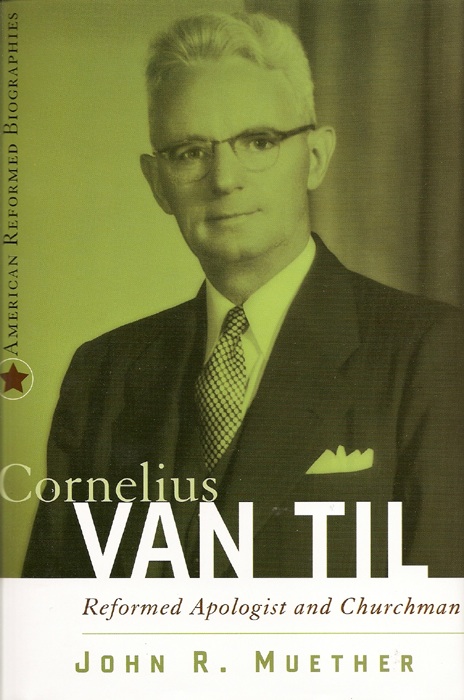
I’ve been reading John Muether’s excellently engaging biography of Kees Van Til for the American Reformed Biographies series. There has been so much that challenges, convicts, and encourages. Though introduced early on, one idea that Muether brings out was Van Til’s ability to be suaviter in modo, fortiter in re. Broadly rendered as “gentle in manner, forceful in deed,” Van Til’s personal interactions and writing were a demonstration of this truth. One student, Grady Spires, is recorded as noting, “I recall his [Van Til] debating liberal and neo-orthodox champions at Boston University. He graciously, respectfully, but incisively told them that they were going to hell.”[*]

A real mark of this quality is when the compliment is paid by opponents, and not just comrades. It is one thing to be self-congratulatory, and quite another when even your adversaries note your ability to be strong in substance while delicate in communication. Evidently, this was true of Van Til. Though he was no presuppositionalist, Lewis Smedes praised in him, “it is possible to be profoundly critical of all compromises with the truth, and yet always cum suaviter modo” (209). Continue reading