Repenting of Regret: Your Future Determines More Than Your Past

regretWhat kept Abraham from being crippled by regret over Ishmael, whose progeny would plunge two lineages into millenia of violent conflict? What kept Joseph from the bitter regret of losing the prime of his life to wasted jail time, betrayal, and abandonment? What kept David from despairing in regret over Bathsheba – not only losing their child, but the perpetual consequence of the sword in his own household? What kept Peter from the regretful shame of denying his Lord and Master three times? And what steadied Paul when he could have easily plunged into guilt and regret over his former life as persecuting Saul?

What will keep you from a life crippled by regret? What will bring you hope?

There’s only one medicine that can cure the cancer of regret.”Therefore, preparing your minds for action, and being sober-minded, set your hope fully on the grace that will be brought to you at the revelation of Jesus Christ” (1 Peter 1:13). Continue reading

…Amidst all the dangers of this world, may we stand upon the foundation of thy word which never can fail…”

Quote

john-calvin“Grant, Almighty God, since thou settest before us so clear a mirror of thy wonderful providence and of the judgments on this ancient people, that we may also be surely persuaded of our being under thy hand and protection: – Grant, that relying on thee, we may hope for thy guardianship, whatever may happen, since thou never losest sight of our safety, so that we may invoke thee with a secure and tranquil mind. May we so fearlessly wait for all dangers amidst all the changes of this world, that we may stand upon the foundation of thy word which never can fail; and leaning on thy promises may we repose on Christ, to whom thou has committed us, and whom thou has made the shepherd of all thy flock. Grant that he may be so careful of us as to lead us through this course of warfare, however troublesome and turbulent it may prove, until we arrive at that heavenly rest which he has purchased for us by his own blood. – Amen.”

John Calvin, prayer concluding his 1st lecture on the book of Daniel
(HT: AC)

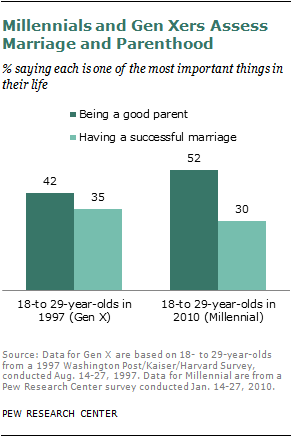
According to Pew Research, Millenials misunderstand relation to marriage and parenting

2011-milliennials-marriage-16For Millennials, Parenthood Trumps Marriage

When it says further down “Most Millenials Want Both,” caveat lector: I assumed it meant most millenials want a good marriage and good parenting. That’s not what it says. While they want both marriage and parenting, the overall premise that parenting is more important than marriage is emphasized throughout the research.

Read the whole thing here.

Resources on Church Government

Both video and audio resources for thinking biblically about ecclesiology and polity.

About

Resources

Events

Spread!

Marks-of-a-True-ChurchOne of the enduring decisions that continues to divide Christian denominations is polity – how the church is to be governed. Episcopal, congregational, presbyterian… each of these systems of authority and submission draws from elements of Scriptural truth, and believers have been unable to completely reconcile the various strands across denominations.

One sign of encouragement, however, seems to be recent, small trends towards agreement. Many denominations that are independent/congregational have been putting a greater emphasis on partnering together, and connectional/presbyterian denominations have displayed a willingness to think about the importance of the local congregation.

Examples of this abound in confessional, orthodox American Christianity. Denominations that were created out of the fight against modernism and biblical faithlessness – e.g., the Orthodox Presbyterian Church, the Lutheran Church Missouri Synod, the Presbyterian Church in America, the United Reformed Churches of North America – have all by in large been careful to regulate centralized power and emphasize local, congregational authority (no doubt partly in reaction to abuses they had witnessed prior). On the other end of the polity spectrum, independent churches are showing an increased interest in working together. Networks such as Acts 29, the Gospel Coalition, Redeemer Network, and Reformed Congregational all act as evidence for this trend. Perhaps there is an increasing desire to find strengths on both ends of the spectrum, and God willing, careful students of Scripture will find ways to biblically and confessionally articulate these truths that lead to greater unity.

But enough pontificating, and on to the actual resources! Continue reading

Reformed Piety

Quote

Hodge“The thesis of this study is that Charles Hodge manifested the attributes associated with Calvinistic confessionalism (strong adherence to creedal religion, liturgical forms, and corporate worship) as well as characteristics of evangelical pietism (the necessity of vital religion marked by conversion, moral activism, and individual pious practices)…

The unique combination of confessionalism and pietism characterized Charles Hodge’s spiritual life from the cradle to the grave.”

Hoffecker pp. 32 – 3

Monday Morning Pulpit: The Coming Kingdom Disrupts All Other Kingdoms

MondayMorningPulptiSometimes you run out of room or time in your Lord’s Day sermon, and so “Monday Morning Pulpit” is a chance to expand upon or reinforce ideas you didn’t have a chance to finish during the sermon.

Doing some last minute sermon prep the other week brought me to this gem in Herman Ridderbos’ The Coming of the Kingdom. It was incredibly helpful to recast some of the homiletical language from the sermon in the kingdom language that Ridderbos so helpfully draws out from the text:

…in John’s [the Baptist] and Jesus’ preaching the coming and break-through of the kingdom are put in the foreground, and not the state of things at the time of fulfillment. This tremendous dynamic of the divine coming which sets the world of the angels in motion (Matt. 1; Luke 2); fills the devil’s empire with alarm (Matt 4:3ff; Mark 1:24; Matt 12:29); yes, even causes Satan to fall from heaven (Luke 10:18), permeates and transmits itself in everything and in all who are touched by it. For the coming of the kingdom is the initial stage of the great drama of the history of the end. It throws man and the world into a crisis.

Continue reading

Owl Rights

I was reading my son to sleep with a night time book about owls.

OwlsStoryThe story mentioned that owls are protected under U.S. laws. Sure enough, with a little googling, the 1918 Migratory Bird Treaty Act protected many species, and owls were added to that treaty in 1972. The precise language states:

Unless and except as permitted by regulations made as hereinafter provided, it shall be unlawful at any time, by any means or in any manner, to pursue, hunt, take, capture, kill, attempt to take, capture, or kill, possess, offer for sale, sell, offer to barter, barter, offer to purchase, purchase, deliver for shipment, ship, export, import, cause to be shipped, exported, or imported, deliver for transportation, transport or cause to be transported, carry or cause to be carried, or receive for shipment, transportation, carriage, or export, any migratory bird, any part, nest, or egg of any such bird, or any product, whether or not manufactured, which consists, or is composed in whole or in part, of any such bird or any part, nest or egg.
source

I am neither an owl-ologist, nor the son of one, but it seems to me that it is not a stretch to recognize the great lengths we go to in protecting owls based on a 1972 law. I am dumbfounded, therefore, that one year later we would aggressively attack and murder unborn babies in 1973’s Roe v. Wade.

I am against terminating pregnancies because there are self-evident truths woven into the fabric of our universe that prohibit the taking of innocent and defenseless life. More fundamentally, as a Christian I believe these unborn human beings are made in the image of their Creator, and their sacred life should not be extinguished prematurely.

But suppose you disagree with me (in spite of all the evidence, and ultrasound images!, to the contrary) that fetuses are not human beings, merely reproducing tissues; pre-human life. Fine. Could we at least work toward agreement that fetuses deserve the same rights and protections as owls?

What NA28 May Mean For the Future of Reasoned Eclecticism

DBWallaceNT manuscript guru Dan Wallace recently wrote at his blog on the newest edition of the critical text of the Greek New Testament, “Nestle-Aland 28: The New Standard in Critical Texts of the Greek New Testament.” There was a lot of interest there, but a few things stood out.

As INTF [Ed. – Institut für neutestamentliche Textforschung in Münster] worked through the Catholic letters, they came to see much greater value of the Byzantine manuscripts than they had previously. In Wachtel’s presentation, he noted that the NA27 displayed “prejudice against the Byzantine tradition” while the NA28 recognized the “reliability of the mainstream tradition.” This is a welcome change in perspective, made possible because of exhaustive collations.

The changes are so great that the apparatus symbols will change as well, from a gothic “M” to “Byz.” Wallace calls it a “sea change” in Münster for how the text is approached.

Secondly, Wallace says “a step back” has been taken in the editorial process.

The previous edition was edited by three Protestants (Kurt Aland, Barbara Aland, Bruce Metzger), one Roman Catholic (Carlo Martini), and one Greek Orthodox scholar (Ioannes Karavidopoulos). The latest edition lists as its editors only “the Institute for New Testament Textual Research… under the direction of Holger Strutwolf.” … the final decisions about the text are solely in the hands of Münster.

No ecclesiastical information was listed, and it sounds like there is a fairly firm bottleneck in the final decision making process. Textual scholars would be able to say if this is typical or a departure from the norm, but Wallace noted it as a step back.

So then, on come the questions.

  1. Is this a change in reaffirming the role of the Byzantine, Majority text? (See Wallace’s article for some redefinition of what “Majority/Majorities Text” will mean going forward.) Is this a step toward bringing Received Text and Critical Text proponents together?
  2. Continue reading