Shoring Up Contentment

Contentment booksI think everyone struggles to be truly content. Whether in possessions, circumstances, relationships, or something else, we all answer like Rockefeller when he was asked how much money is enough: “just a little bit more.” Contentment is a battle for everyone.

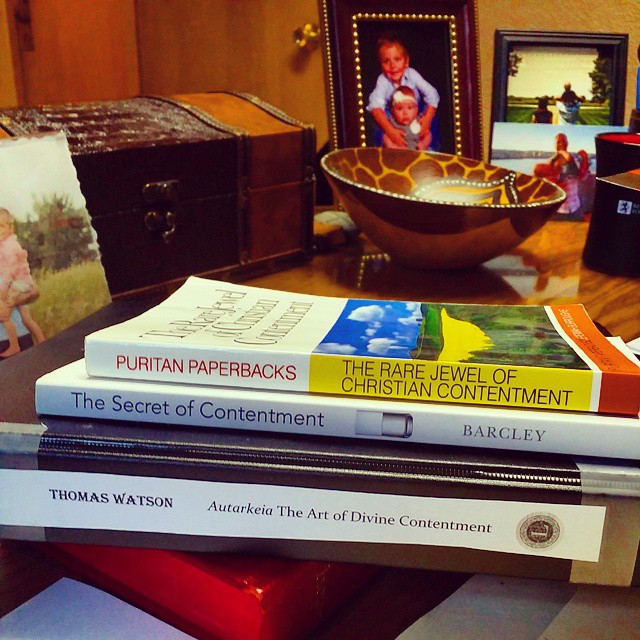
I recently preached on contentment, and I had three resources that were of great help to me. The following books are often missed by Christians, and I hope you’ll take note of these. Jeremiah Burrough’s The Rare Jewel of Christian Contentment (Amazon), William Barcley’s The Secret of Contentment (Amazon), and Thomas Watson’s The Art of Divine Contentment (Amazon paperback, CCEL, PDF) are all masterful treatments of a subject that many modern Christians are deficient in.

For example, Watson practically addresses several enemies that would threaten to steal our contentment. We all face circumstances in life that make it that much harder to practice godly contentment, and Watson lists some of these and then goes on to address these from Scripture:

I have lost a child:

  • It was my only child
  • I have a great part of my estate melted away

It is sad with me in my relations: Continue reading

Risk In Missions, Love, and Evangelism

Mission_10.40Window_600Following Christ can be dangerous. But as John Piper argues in Risk is Right, the ephemeral dangers are completely obliterated in the light of the unspeakable rewards that await those who risk all for Christ.

This was brought home to me in two ways. First, Nancy Writebol quoted the words from Risk is Right that speak these truths so eloquently:

There are a thousand ways to magnify Christ in life and death. None should be scorned. All are important. But none makes the worth of Christ shine more brightly than sacrificial love for other people in the name of Jesus. If Christ is so valuable that the hope of his immediate and eternal fellowship after death frees us from the self-serving fear of dying and enables us to lay down our lives for the good of others, such love magnifies the glory of Christ like nothing else in the world.

What makes this amazing is that Nancy is an ebola survivor; she took a huge risk to help others through Christ’s love to her own personal safety.

But the second way was that I was reminded of Nancy’s statement by a missionary that we support at Zion. Continue reading

Articulating Justification Back Then

I hatelove those articles where you have to guess the source of the quote. See, for example, the “Who Said That?” series at The Riddleblog.Riddleblog01 The quotes are either tricky, misleading, or – depending who is writing – completely out of left field.

But that isn’t how this post will go. Spoiler alert: the following quote is from Doug Wilson, in a chapter I’m re-reading for a new initiative I’m helping with. I’m struck by his fairly strong and clear articulation of justification:

The objective reality of our justification is grounded upon the righteousness of Christ. We are put right with God because of the goodness of somebody else. Just as Adam’s sin was imputed to every man, in the same way, Christ’s righteousness was imputed to every saved man. The ground of this justification is the righteousness of Jesus Christ, while the instrument for receiving it is our faith. It cannot be emphasized too strongly that we are not justified on the basis of our faith. We are justified on the basis of Christ’s faith and work. This gospel message of free grace liberates – it liberates from the condemnation of sin once for all, and from the power of sin progressively…
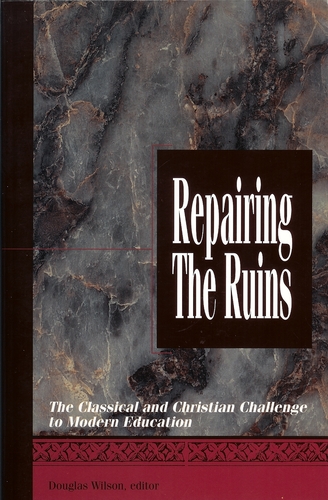
RepairingRuins_Wilson
Justification and sanctification are distinct, but they are never separated. They are not the same work, but the one who works in us for His good purposes always accomplishes both…

The centrality of Christ’s righteousness is imputed to us by faith alone, and this provides the only possible foundation for righteous Christian living. Because the rest of this essay is directed at certain standards of personal conduct in a Christian school, I thought it was important to acknowledge the only possible foundation for this personal conduct.

I appreciate the clarity. Detractors might point out he is not clear here on the nature of human faith, but a charitable read notes that he is dealing with the objective nature of justification. (I note, with some glee, a clear forensic priority as well!) There is no sign of the equivocating he was sometimes (justly) accused of. I wish there had been more writing like this after 2002.

Of course, that is the point. Repairing the Ruins, an edited volume on classical education – not soteriology, was published in 1996. Is it too much to wonder if the writing you see above was the kind that got Wilson invited to Ligonier conferences? And the kind of writing he did later brought controversy? The reader must decide if there was a difference.

Horton on the Holy Spirit at Moore Annual Lectures

horton_holyspiritMichael S. Horton, the J. Gresham Machen Professor of Systematic Theology and Apologetics at Westminster Seminary CA, was the speaker for the Annual Moore College Lectures for 2014. Held August 14 – 22 in Sydney, Australia, the schedule was as follows:

Public Lecture: How the Spirit Changes Everything Public Evening lecture

Lecture 1: Lord and Giver of Life

Lecture 2: The Spirit of Christ

Lecture 3: The Spirit of Holiness

Lecture 4: The Spirit and the Bride

Lecture 5: The Age of the

The video recording of the lectures are also available here. The audio lectures can be found here, and a sample is given below.

From the brief snippets of the lectures that I’ve listened to, I have found this to be classic Horton, bringing the text of Scripture into new light. Whether it is emphasizing the legal duties of paraclete in John 14 in the covenant lawsuit, or how unbelieving Israel is identified with the world so that Christ’s disciples are excommunicated as latreia, there will be a lot to appreciate for those who enjoy vintage Reformed theology from fresh exegesis.

You can find out more about Dr. Horton’s travels and teaching in Australia here.

A Prayer of Illumination

Westminster_Assembly2

The following prayer is inspired by Q&A #155 of the Westminster Larger Catechism, “How is the Word made effectual to salvation?”

O Lord God, our Father who has spoken in Your beloved Son,

Grant, we humbly pray, Your Spirit to assist Your Holy Word. By Your power, turn on the lights in our soul, so that Your Word would be a lamp to our feet, and lead us in the paths of righteousness. In Your wisdom, grant that we would become convinced that Your way leads to life, and our ways and wisdom will lead only to death and destruction. May Your Spirit grant us the grace of humility, to not think highly of ourselves, or our talents, or how many Facebook friends we have, but to think highly of Jesus, that He may increase even as we decrease.

Lord, may your Spirit take us on a journey this morning. Lead us, O Father, away from our places of comfort and self-sufficiency, and the never-ending labyrinth that always brings us back to self. Instead, may we walk by the Spirit as He leads us to our eternal safety in Christ Jesus our Lord. Grant that as we hear Your Word preached, we would undergo a spiritual makeover, coming away more and more like Jesus. Father, change our thoughts so that we would have the mind of Christ. Lord, transform our loves and desires, so that we would have faith working through love, the kind of love we discover in Your Holy Word as demonstrated at the Cross. Teach us to obey You here on earth, even as You are obeyed in heaven.
Continue reading

Chesterton on Education

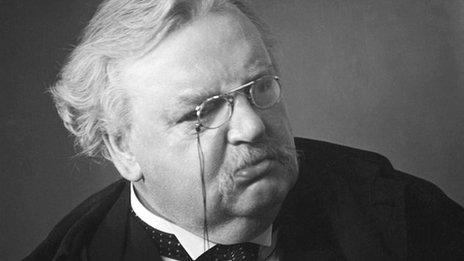
photo courtesy of taxpolitix.com

photo courtesy of taxpolitix.com

“Education is simply the soul of a society as it passes from one generation to another.”

“Education is a word like ‘transmission’ or ‘inheritance:’ it is not an object but a method. It means the conveying of certain facts or qualities, to the last baby born.”

“That is the one eternal education; to be sure enough that something is true that you dare to tell it to a child.”

“Education is violent; because it is creative. It is creative because it is human. It is as reckless as playing on the fiddle; as dogmatic as drawing a picture; as brutal as building a house. In short, it is what all human action is; it is an interference with life and growth.”

“Dead things flow with the current; only living things swim upstream.”

G. K. Chesterton What’s Wrong With the World (San Francisco: Ignatius Press, 1987)

Calvinist Influence on Worship in England

Calvin_HeaderTo what extent, if any, should Anglican and Reformed models of worship overlap? As to their differences – first, what are they; and secondly, are they material or formal? And if the differences are real – it seems fairly clear that on something as fundamental as the Regulative Principle of Worship, the two streams diverge – how should we handle influences and reactions?

As the 42nd PCA GA approaches, this question will grow slightly more important as different pockets within the denomination come into contact with each other. Some of these intersections will create snark:

And others will strive to mingle, as noted in this article from a largely appreciative perspective, “Thoughts Concerning the Influence of the Anglican Tradition on Contemporary Reformed Liturgical Practice.

My own opinion is both neophyte and (reactionary) cautious. Continue reading

Obama: Contra Secularists

President_Barack_Obama

Secularists are wrong when they ask believers to leave their religion at the door before entering into the public square. Frederick Douglass, Abraham Lincoln, William Jennings Bryan, Dorothy Day, Martin Luther King–indeed, the majority of great reformers in American history–were not only motivated by faith but repeatedly used religious language to argue for their cause. To say that men and women should not inject their “personal morality” into public policy debates is a practical absurdity. Our law is by definition a codification of morality, much of it grounded in the Judeo-Christian tradition.

This quote is from the President’s “Call to Renewal Keynote Address,” on June 28, 2006. Emphasis mine. I used this in my Rotary address earlier today!