Dabney’s 7 Points for Preaching

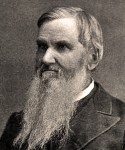
R. L. Dabney

T. David Gordon’s Why Johnny Can’t Preach is responsible for bringing R.L. Dabney’s (1820 – 98) 7 “cardinal requisites” back on my radar. I’m generally against “New Year’s Resolutions” as being far too American and theologia gloriae (wink, wink), but I do hope to reflect more proactively to my own preaching in light of Dabney’s requisites for the year to come.

When I first read these, I was surprised to see nothing about “Christ-centered,” “redemptive historical,” etc. Now, I would suggest that Dabney is getting more at preaching method than content. Thoughts? Without further ado, then, the 7 “cardinal requisites:”

1. Textual Fidelity
“Since the mind of God is disclosed in Scripture, the sermon must be entirely faithful to the text-a genuine exposition of the particular thought of a particular text.”

2. Unity
“Unity requires two things. The speaker must, first, have one main subject of discourse, to which he adheres with supreme reference throughout. But this is not enough. He must, second, propose to himself one definite impression on the hearer’s soul, to the making of which everything in the sermon is bent.” Continue reading

A Prayer for the New Year

You have been our shelter Lord, to every generation

From everlasting to everlasting, you are God

You make known the ends from the beginnings

All the days of our lives are written in your book

Because You do not change, O God, we are not consumed

You show steadfast love, to those who trust in You, for a thousand generations

In this new year, O Lord, we seek you and your Kingdom

Therefore, we will not worry, or be anxious, for anything

In this new year, O God, we will receive all things from Your Fatherly hand

Therefore, we will not grumble, or complain, but receive all things, with hope, and gratitude

We will not make plans on our own, but only as You will

For Jesus sake, who is the same yesterday, today and forever, Amen.

How to Preach Christ from the OT

I’m working through sections of Sidney Greidanus’ Preaching Christ from Genesis: Foundations for Expository Sermons for a sermon series coming up on Abraham’s life in Genesis 12 – 25. I’ve looked at preaching Christ from the OT before, but never explicitly from Greidanus. He presents seven means by which we can see Christ in OT passages, and I’d like to list those below. Greidanus defines preaching Christ as “preaching sermons which authentically integrate the message of the text with the climax of God’s revelation in the person, work, and/or teachings of Jesus Christ as revealed in the New Testament” (Preaching Christ from the Old Testament, 10).

Greidanus presents seven avenues to get to Christ from a text, and this is necessary if the interpreter is seeking to understand the text first, as the writer intended for Israel (or the original audience) to hear the message; and secondly, as the message is understood in light of the completed canon of the Triune God’s self-revelation to His covenant people. When both are recognized as necessary, the interpreter realizes seeing Christ in light of a passage isn’t an add on, but necessary to understanding the fullest and truest meaning of a pericope.

7 Ways of Preaching Christ

The following comes from pp. 2-6.

Redemptive Historical Progression
Scripture is a narrative that begins with a good creation, is abruptly marred by the Fall, and then traces God’s redemptive purposes in human history to bring about redemption and the New Creation. First through Abraham, and then Israel, the story of redemption climaxes and is focused in the advent of Jesus Christ. This method seeks to understand a pericope in light of this “metanarrative.” Continue reading

Zion Christmas Cantata & Narration

ZION CANTATA
December 18, 2011
________________________________________________

Prelude

Narrator
Have you noticed how fast the days are going? When the holidays approach, the days fly by. More presents to buy, cookies to bake, decorations to be hung… in all the hustle and bustle, there is not enough time in the day – the day of Christmas is coming!

All this work for one day. The ancient prophets spoke of a Day, a Day that would bring rest instead of weariness, a Day of peace amidst war and strife, and a Day of beauty and glory far away from our gray and dreary days on earth. But when will this day come? And what does Christmas have to do with this Day?

On This Day, Earth Shall Ring

Narrator
What wonderful sounds: “gloria in excelsis Deo!” Glory to God in the highest! Surely there are few things sweeter to hear.

Can you imagine keeping watch with the shepherds as they watched their flocks by night? Can you contain your awe and excitement, as the air around them begins to tremble with a heavenly power. But wait a minute! Do you hear that? What is that sound? It sounds like the most beautiful voices ever assembled, a swirling of the melodies and harmonies of glory. Behold! A light in darkened night sky!  Let joy fill our hearts!

All My Heart This Night Rejoices Continue reading

Pastors, Manhood & Ministry

The Desiring God 2012 Pastor’s Conference is entitled “God, Manhood & Ministry: Building Men for the Body of Christ.”

This year’s speakers are:
Doug Wilson
Darrin Patrick
Crawford Loritts
Ramez Atallah
John Piper

The conference, which takes place from January 30 – February 1, is on a topic that I’ve been thinking about a lot recently, so I’m very excited to hear some of these men’s thoughts. I’m secretly hoping Doug Wilson will get drug into a justification/covenant debate in the Q&A, that Piper’s bio on J.C. Ryle will be excellent, and that there will be some sort of “fire sale” in the bookstore just when I walk in (preferably on the NIGTC commentary series!).

Here’s a clip where Piper invites pastors – and elders! – to the conference: Continue reading

The Technical Is Pastoral…

technical_work…and the grammatical is applicable. In his very good series “How Seminarians Can Learn to Preach to Normal People” (Part 1, Part 2, Part 3), Tim Raymond offers the following, generally true advice:

…Learn to rely on both exegetical and pastoral commentaries… Exegetical commentaries, such as the NICOT or the NIGTC, tend to query the text by asking grammatical, linguistic, historical, and text-critical questions such as, “What is the significance of this aorist?”, “Was this passage in the autograph?”, “How does this verse correlate with what we know from Phoenician archeology?”, and so forth. Pastoral commentaries, such as John Owen on Hebrews or James Boice’s commentaries, tend to ask theological, devotional, and spiritual questions of the text such as, “How does this passage feed my soul?”, “How might this passage help my congregation endure through suffering?”, “How can God’s Spirit actually enable me to obey this command?,” and so forth… What I’m arguing for here is that if a pastor wants to do responsible expositional preaching to ordinary people, he needs to rely on both types of commentaries.

I think Raymond is generally right on, and I’ve enjoyed reading his series. But I would like to nuance this; not by bifurcating the academic from the practical, but rather pointing out that excellent application derives from solid, technical exegesis. So instead of saying: “Is this an aorist?” and “How does this apply to families?” as two separate questions, let us instead ask one question: “What does the fact that this verb is an aorist say to the families in our congregation?” To quote somebody else, the Bible is already practical. Its the prepositions, grammatical constructions, and first-century context that helps us to understand how it is practical.

I think Raymond is basically saying this. He later notes, “Since all pastoral application is dependent on right exegesis, the faithful preacher will need to use academic commentaries to ensure proper interpretation.” This is probably only a difference of emphasis. But the emphasis I’m trying to make says that the exegesis itself is what is practical.

How to Listen to Bad Sermons

Dear Zion,
We have spent some time thinking about the importance of sermons in the regular, spiritual diet of God’s people, including how to hear a sermon, and also how to live from a sermon. But this all assumes that we are hearing good sermons to begin with. What should we do when we listen to a bad sermon?

Scripture tells us that there are some sermons so bad, we should not listen to them. When Paul soberly warned and admonished Timothy “to preach the Word” (II Timothy 4:2), the emphasis must be retained: a sermon is only a useful sermon if the content is the Word of God. Paul himself resolved to “know nothing except Jesus Christ and Him crucified” (I Corinthians 2:2). Unfortunately, we live in a day and age where the content of many (most?) sermons do not rely on God’s Word and His power, but instead rely on the preacher’s experiences, storytelling, practical suggestions, and eloquence. The preacher may even begin with a Bible passage, but the content of the sermon that follows is not coming from sacred Scripture. If sermons today were edited down to only “Christ and Him crucified,” how much would be left?

Similarly, Paul warned Timothy that there would be a time when “people will not endure sound teaching, but they will gather around them a great number of [preachers] to say what their itching ears want to hear, to suit their own desires” (II Timothy 4:3). Continue reading

The Problem with Most Bible Studies

You know that feeling you get when someone perfectly describes something you have witnessed or seen dozens of times, but never been able to articulate yourself? I had that feeling as I listened to Christian Smith describe the average, American Evangelical Bible study. The following quote is taken from an interview at The White Horse Inn:

Basically, what gets reported [by anthropologists studying evangelical Bible studies], and what I think I agree with, is:
The text is read, umm… what the text actually says is not all that much paid attention to. People, rather, sort of search around in their heads and their memories and their feelings for something that seems to connect to the text. And then, they conclude, “Oh yeah, well that makes me feel like this…” or, “What I think is that…” or, “In my opinion what it means is this…” And usually, the text is serving as a pretext to affirm something they already believe, rather than as an authoritative text to challenge what they already believe.

Nailed it.

Women’s Fellowship Annual Address 2011 Part 2

Last time, we looked at how Christ’s ministry is the foundation for the Church’s ministry. You can read part 1 here. We continue with how, but considering Christ’s emphasis for the church, how that may shape our own Women’s ministry.

So then what might Christ’s ministry say to our Women’s Fellowship here at Zion? Broadly, it first gives us some emphases to keep in mind in all our ministry:

Women’s Ministry Themes
Attractional vs. Missional
Attractional approaches to ministry are those which basically take the “if we build it, they will come” direction. These churches are typically known for their varied resources often including rock walls, coffee shops, gyms, sports leagues, etc. The idea that drives this approach is that if you can just get the people in the doors, you can keep them there.

We prefer to view things not from an attractional, but a missional perspective. Instead of ministering on the basis of people coming to us, our approach is to take the ministry to the people. Like the Son of God condescending to leave His heavenly home and dwell among those whom He loved, we want to be known for our willingness to take the gospel from within the walls of our building to affect the lives of those we come into contact.

Width vs. Depth
In polling various churches, the vast majority cite numeric growth as their driving evidence of success. Success is measured by quantifiable numbers of weekly attendance, small group attendance, Sunday school attendance, etc. Achievement is determined by the number of people with whom the message is shared. We want our primary purpose of the local church to be making disciples. Not mere attendees or even converts, but disciples – mature followers of Jesus Christ. In the end, the “Father is glorified by this, that you bear much fruit and so prove to be [Christ’s] disciples” (John 15:8). As we go deeper in Christ, we will pull others along with us.

Marketing vs. Gospel
Some churches emphasize a certain “draw.” Perhaps they are the church with good music, or a great drama team or a really excellent children’s ministry. Like the attractional approach, the hope is to market the church to bring people in. The problem that we see with this approach is that it is generally true that “what you win them with is what you keep them with.” If you win people with lights and smoke, then next year you need more lights and more smoke. You are always forced to better your resources and marketing of those resources to distinguish yourself. The challenge is that the culture is always changing and when you market a specific segment or ministry, then you inevitably teach that your church is not for everyone.

At Zion we hope to win people by the gospel of Jesus Christ. If we can do this, then all we have to do to keep them is continue to preach the gospel — what we should be doing anyway. We hope to accomplish this through challenging our people to have a missional perspective as they live a gospel-centered life. So, the church will experience growth because of mission rather than marketing.

Entitlement vs. Sacrifice
A deep and pervasive sense of entitlement exists in much of the evangelical community. Those who have such an attitude, though they might not articulate it, assume that the church exists merely to
meet one’s own felt needs. Therefore, the church that caters to such an ideology is forced to create thousands of different programs to meet those ever-changing desires.

The Bible teaches not that the church exists to meet your needs, but rather that you exist to meet the needs of others. A heart of humility does not say “meet my needs,” but instead “do not cater to me. I am here to serve.” In the end, the greatest need, felt or not, is for the gospel. If we spend our time meeting peripheral issues, all we have done is dealt with symptoms without addressing the disease. Certainly we recognize the legitimacy of needs and are here to serve those in need, but an attitude of entitlement and true service are at odds.[2] Continue reading

Update: New Reformed Church in Twin Cities

Getting biblically solid, confessionally Reformed churches in the Midwest is not easy, and St. Paul & Minneapolis MN prove no exception. So it is exciting to see that fellow WSCal grad Rev. Ryan Kron is starting a church plant in the Minneapolis and Eden Prairie area. So if you’re in the southwest Metro area, give Emmaus Road Reformed Fellowship a look.

Update: “Fellowship” no more! Emmaus Road Reformed Church is officially up and running online, and you can join them for corporate worship this Sunday at:
Eden Lake Elementary School
12000 Anderson Lakes Parkway
Eden Prairie, MN 55347
(Google maps & directions)

Emmaus Road pastor Rev. Kron says: Continue reading