Opening Salvo on the Blood Prohibition

You must not eat meat that has its blood still in it. Genesis 9:4

Background

One of my preaching practicums had us select passages to preach on a doctrinal or ethical subject, and the passages were up for grabs among the students. Through my own choice (thinking I’d “challenge” myself) and what my peers had narrowed in options, I ended up with Leviticus 17. Preaching in the Old Testament? Sure. Preaching from Leviticus? Definitely more challenging. But I had not ever really grappled with the “blood ban” before, and I am so grateful for the opportunity. I hope to do a series of looking at different aspects of the Blood Prohibition.

Why the Blood Prohibition?

The “blood ban” is actually a fantastic opportunity for the student of Scripture to stretch themselves in the whole discipline of theology. Following the likes of Geerhardus Vos, true theology is a multi-discipline process, and looking at the Blood Prohibition allows one to utilize all of their skills. First, there is the exegetical component. Continue reading


The Book of Eli is a Blind Mad Max

Eli: Its in the back of the TV
Carnegie: Go check the TV!
Henchman: The what?

The Hughes’ brothers 2010 dystopic Western The Book of Eli attempts to be many things; many more things than I will do here in this little write up. What follows are several completely unrelated. spoiler-ridden, and very loose reactions I had after watching Eli tonight.

Growing up, I briefly got into a Western series entitled Legacy – a Western, teen-fic series baptized with Christian overtones. The Preacher, if I’m remembering this right, was the archetypal “Man in Black” that spoke softly (but when he did he quoted Scripture) and carried a hot six-shooter. Driven to get the girl and bring the order of law to a town being controlled by a greedy tyrant, he… well, you get the idea. Preacher always had a Proverb or (eisegeted) phrase of Christ’s to quote to the bad guy, right before the plot drove the Preacher to resolve the tension by killing the bad guy and galloping away on his trusty steed.

It was the perfect amount of testosterone with a spiritual veneer for me as a young teen. However, even then I reacted to a strong dichotomy between the Preacher’s penchant for quoting the Sermon on the Mount right before turning the other cheek barrel of his shotgun on the baddie. One of the best times was when Preacher brought his Bible and his revolver into the pulpit, extinguishing the baddie by shooting him through(!) the wooden lectern.

That same schizophrenia pervades Eli. Continue reading

Bumper Sticker Theology

“There was; when He was not” – Arius
“As soon as a coin in the coffer rings / the soul from purgatory springs.” – John Tetzel
semper eadem” (always the same) – Romish Counter-Reformation
“I can write the Gospel on a dime.” Dwight L. Moody
“Once saved always saved.” (large swaths of) American Evangelicalism
“Let go and let God.” Am. Evangelicalism
et cetera ad nauseum

Clearly, there have been some less than helpful slogans running through the corridors of church history. However, aren’t the solas more or less slogans? Reformed churchmen have utilized pithy sayings as well. So how should we think about sloganeering? Useful if it has the right theology (pragmatic)? Fight fire with fire? Or is there another means for addressing this phenomenon?

Tolkien’s “On Fairy-Stories”

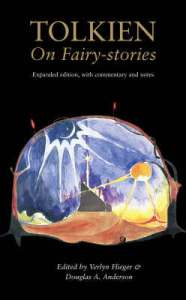
One of the most quoted and celebrated critical pieces of Tolkien’s is his apologia for the fantastical fiction, “On Fairy-Stories.” Here, Tolkien clarifies what it is about Marchen that draws the reader out of their normal reality to “recover” more their own reality than they would have ever dreamed. He explains several of his most important compositional tools – such as eucatastrophe and mythopoiesis – and brings critical scholarly work and discussions of trolls together in a way that can hold the attention of even this reader.

Originally a contribution to a fetschrift for a colleague (which was edited by C.S. Lewis), the article appeared in various formats, including The Tolkien Reader (1966). It is now republished in a (critical) edition by Flieger and Anderson.

On a not wholly related note, but nevertheless still within the Faerie!, is the intriguing article by Jeffrey Mallinson in the Journal Of Religion and Popular Culture: “A Potion too Strong?: Challenges in Translating the Religious Significance of Tolkien’s The Lord of the Rings to Film.” Now that we are somewhat sufficiently chronologically removed from the films, I’ve enjoyed looking back at some of Mallinson’s arguments. You can read his article here.
_____________________________________________________

On Fairy-Stories

I propose to speak about fairy-stories, though I am aware that this is a rash adventure. Continue reading

Brakel on Typology

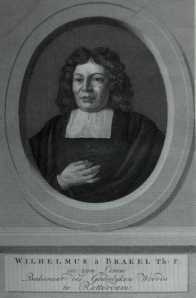
Wilhelmus a Brakel (1635 – 1711) was a prominent Dutch theologian and pastor at the end of the High Orthodoxy in the Netherlands. His magnum opus is The Christian’s Reasonable Service, which is (overall) a marvelous combination of dogmatic and practical theology, certainly in the vein of the Nadere Reformatie tradition. For excellent treatments of the Dutch churchman see Bartel Elshout’s resource-rich site.

Brakel is very careful in describing typology. He argues that, unless clear boundaries are given, every star, tree and worm will turn into a type of Christ at the hands of less-than-skilled interpreters. So he lays down the following rules for a type: “If one is to designate something as a type, the following must be true:”

  1. It must have been appointed by God to be a type.
  2. Types had been given to the church of the Old Testament in order that during that time frame she would thereby look unto Christ and believe in Him.
  3. Types were a necessary component of Old Covenant worship such that those who did not use these types for their intended purpose were in sin.

“When these three criteria are absent, however, one may not appoint or designate something as a type” (Volume IV, p. 382).

At first glance, these seem like excellent rules. Continue reading

Jason Kidd Grabs a Ring

When I was in ninth grade, the shoes I wanted more than any other were Kidd’s Nikes. He had just had an amazing rookie year, sharing ROY honors with Grant Hill (where is Glenn Robinson these days?!). I hated the new style that Nike gave Kidd later, so I kept those shoes for years, long after they regularly gave me blisters and wore thin. I loved Jason Kidd’s game, and I’m thrilled that, with the Mavs victory over the Heat last night, Kidd finally has a ring. Continue reading

Bonhoeffer on Cheap Grace

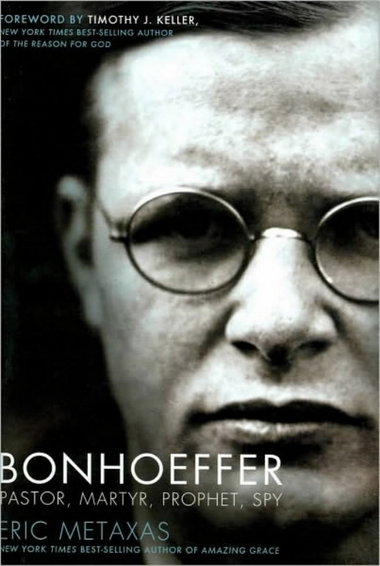
The following are large quotes and snippets from Bonhoeffer’s Cost of Discipleship, pages 45 – 49. A few thoughts afterward.

“Cheap grace is the deadly enemy of our Church. We are fighting today for costly grace… Cheap grace means grace as a doctrine, a principle, a system. It means forgiveness of sins proclaimed as a general truth, the love of God taught as the Christian ‘conception’ of God. An intellectual assent to that idea is held to be of itself sufficient to secure remission of sins…. In such a Church the world finds a cheap covering for its sins; no contrition is required, still less any real desire to be delivered from sin. Cheap grace therefore amounts to a denial of the living Word of God, in fact, a denial of the Incarnation of the Word of God.

“Cheap grace means the justification of sin without the justification of the sinner. Grace alone does everything they say, and so everything can remain as it was before. ‘All for sin could not atone.’ Well, then, let the Christian live like the rest of the world, let him model himself on the world’s standards in every sphere of life, and not presumptuously aspire to live a different life under grace from his old life under sin…. Continue reading

The Athenian Creed

What is the Athenian Creed? Perhaps it is one of the post-Refomration creeds newly republished thanks to Dennison’s or Van Dixhoorn’s work? Or perhaps it is merely an example of Old Side Presbyterianism skewering unbelief and modernism within the Church? If you’re leaning toward the latter, you’d be spot on.

Recently, over at WHI, Mike Horton highlighted the satire that John Witherspoon used to skewer the modernists and Moderates in the Kirk of Scotland. His Ecclesiastical Characteristics, divided into certain “Maxims,” were a hot iron toward his liberal contemporaries.

One such Maxim was his “creed,” a lampooning article of what he considered to be the reigning ideology of the day. Continue reading

Resources on Regeneration

I’m hoping to do some extended thinking (and preaching?!) on regeneration in the next few weeks/months, and I was thinking I should line up a list for reading and meditating on this important doctrine. Unfortunately, it can be a little difficult to find extended discourses on the topic of regeneration. I attribute that to a variety of factors:

    • In the history of doctrine, regeneration has been something of a moving target, especially for Calvin’s successors, where regeneration can mean anything from conversion, repentance, sanctification, or the newer clarification of speaking exclusively of the (initiation of) spiritual life.

Continue reading