
Bumper Sticker Theology

“There was; when He was not” – Arius
“As soon as a coin in the coffer rings / the soul from purgatory springs.” – John Tetzel
semper eadem” (always the same) – Romish Counter-Reformation
“I can write the Gospel on a dime.” Dwight L. Moody
“Once saved always saved.” (large swaths of) American Evangelicalism
“Let go and let God.” Am. Evangelicalism
et cetera ad nauseum

Clearly, there have been some less than helpful slogans running through the corridors of church history. However, aren’t the solas more or less slogans? Reformed churchmen have utilized pithy sayings as well. So how should we think about sloganeering? Useful if it has the right theology (pragmatic)? Fight fire with fire? Or is there another means for addressing this phenomenon?

Tolkien’s “On Fairy-Stories”

One of the most quoted and celebrated critical pieces of Tolkien’s is his apologia for the fantastical fiction, “On Fairy-Stories.” Here, Tolkien clarifies what it is about Marchen that draws the reader out of their normal reality to “recover” more their own reality than they would have ever dreamed. He explains several of his most important compositional tools – such as eucatastrophe and mythopoiesis – and brings critical scholarly work and discussions of trolls together in a way that can hold the attention of even this reader.

Originally a contribution to a fetschrift for a colleague (which was edited by C.S. Lewis), the article appeared in various formats, including The Tolkien Reader (1966). It is now republished in a (critical) edition by Flieger and Anderson.

On a not wholly related note, but nevertheless still within the Faerie!, is the intriguing article by Jeffrey Mallinson in the Journal Of Religion and Popular Culture: “A Potion too Strong?: Challenges in Translating the Religious Significance of Tolkien’s The Lord of the Rings to Film.” Now that we are somewhat sufficiently chronologically removed from the films, I’ve enjoyed looking back at some of Mallinson’s arguments. You can read his article here.
_____________________________________________________

On Fairy-Stories

I propose to speak about fairy-stories, though I am aware that this is a rash adventure. Continue reading

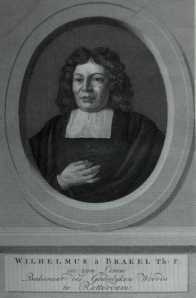
Brakel on Typology

Wilhelmus a Brakel (1635 – 1711) was a prominent Dutch theologian and pastor at the end of the High Orthodoxy in the Netherlands. His magnum opus is The Christian’s Reasonable Service, which is (overall) a marvelous combination of dogmatic and practical theology, certainly in the vein of the Nadere Reformatie tradition. For excellent treatments of the Dutch churchman see Bartel Elshout’s resource-rich site.

Brakel is very careful in describing typology. He argues that, unless clear boundaries are given, every star, tree and worm will turn into a type of Christ at the hands of less-than-skilled interpreters. So he lays down the following rules for a type: “If one is to designate something as a type, the following must be true:”

  1. It must have been appointed by God to be a type.
  2. Types had been given to the church of the Old Testament in order that during that time frame she would thereby look unto Christ and believe in Him.
  3. Types were a necessary component of Old Covenant worship such that those who did not use these types for their intended purpose were in sin.

“When these three criteria are absent, however, one may not appoint or designate something as a type” (Volume IV, p. 382).

At first glance, these seem like excellent rules. Continue reading

Jason Kidd Grabs a Ring

When I was in ninth grade, the shoes I wanted more than any other were Kidd’s Nikes. He had just had an amazing rookie year, sharing ROY honors with Grant Hill (where is Glenn Robinson these days?!). I hated the new style that Nike gave Kidd later, so I kept those shoes for years, long after they regularly gave me blisters and wore thin. I loved Jason Kidd’s game, and I’m thrilled that, with the Mavs victory over the Heat last night, Kidd finally has a ring. Continue reading

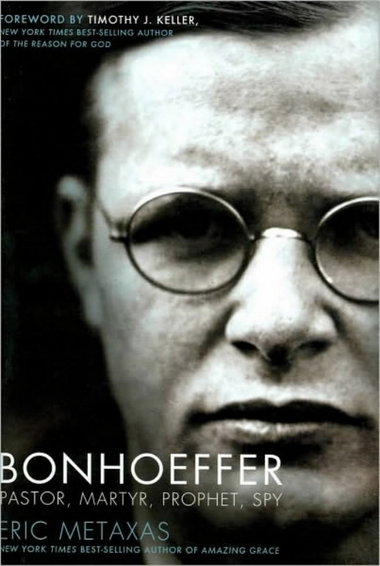
Bonhoeffer on Cheap Grace

The following are large quotes and snippets from Bonhoeffer’s Cost of Discipleship, pages 45 – 49. A few thoughts afterward.

“Cheap grace is the deadly enemy of our Church. We are fighting today for costly grace… Cheap grace means grace as a doctrine, a principle, a system. It means forgiveness of sins proclaimed as a general truth, the love of God taught as the Christian ‘conception’ of God. An intellectual assent to that idea is held to be of itself sufficient to secure remission of sins…. In such a Church the world finds a cheap covering for its sins; no contrition is required, still less any real desire to be delivered from sin. Cheap grace therefore amounts to a denial of the living Word of God, in fact, a denial of the Incarnation of the Word of God.

“Cheap grace means the justification of sin without the justification of the sinner. Grace alone does everything they say, and so everything can remain as it was before. ‘All for sin could not atone.’ Well, then, let the Christian live like the rest of the world, let him model himself on the world’s standards in every sphere of life, and not presumptuously aspire to live a different life under grace from his old life under sin…. Continue reading